
Executive Order 14178, signed January 23, 2025, prohibited the establishment, issuance or circulation of a U.S. central bank digital currency and revoked the 2022 order that had opened digital-dollar research (White House, 2025). On July 18, 2025, the GENIUS Act created the first federal framework for payment stablecoins instead (Congress, 2025). As of April 2026, no U.S. digital-dollar program exists.
Nuv Media publishes information, not financial advice. Crypto-asset markets are volatile and losses are possible. This status report relies on verifiable events through April 18, 2026.
What did the January 2025 executive order actually do?
The order did three concrete things. It revoked Executive Order 14067 of March 2022, the Biden-era directive that had instructed agencies to research a U.S. CBDC. It barred any agency from establishing, issuing or circulating a CBDC in any form. And it created a President's Working Group on Digital Asset Markets, tasked within 180 days with proposing a federal digital-asset regulatory framework (White House, 2025).
For the Federal Reserve, the order ended a research thread that had been open since the Fed's January 2022 discussion paper, Money and Payments, which had already stated the Fed would proceed only with congressional authorization (Federal Reserve, 2022). Agency CBDC working groups and pilot discussions wound down through 2025, and the working group's July 2025 report centered on stablecoin legislation and market structure rather than any central-bank liability (White House, 2025).
The politics preceded the order. The House passed the Anti-CBDC Surveillance State Act in July 2024 on a largely party-line vote, prohibiting the Fed from issuing a retail CBDC without Congress; the bill stalled in the Senate and was overtaken by events (House of Representatives, 2024). Several states acted on their own — Florida enacted a prohibition on CBDC use in state commerce in 2023 (Florida Legislature, 2023).
What did the GENIUS Act choose instead?
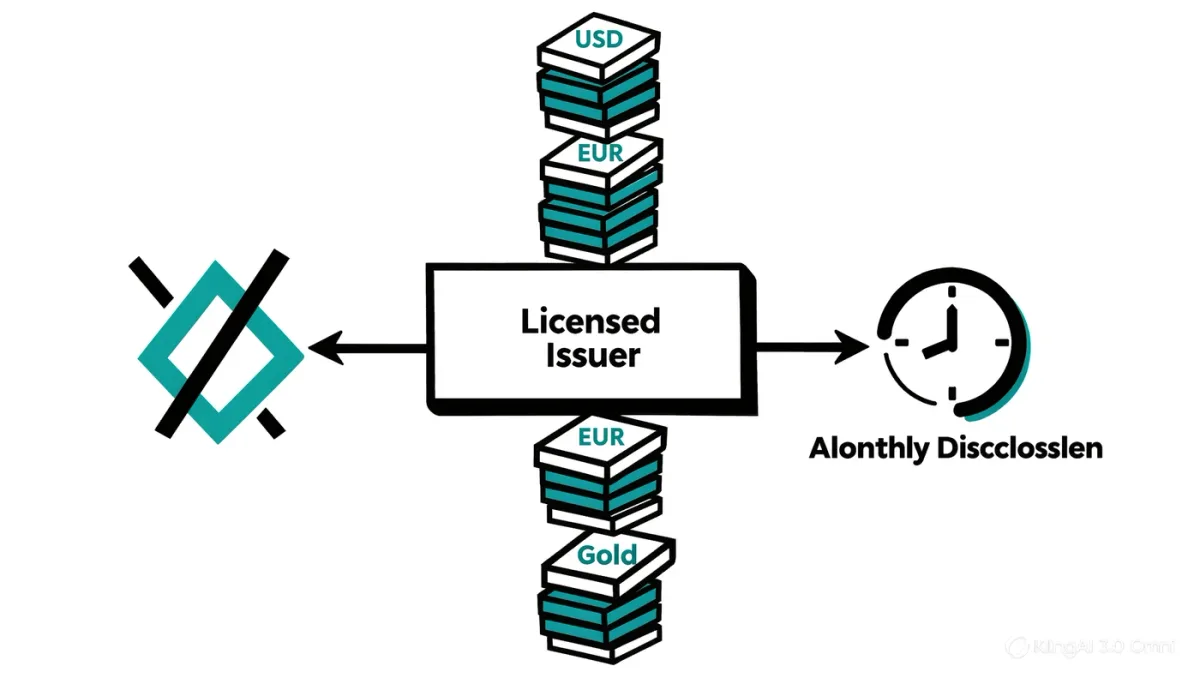
The Guiding and Establishing National Innovation for U.S. Stablecoins Act, signed July 18, 2025, regulates privately issued, dollar-backed tokens as the digital form of cash. Payment stablecoin issuers must hold reserves at least one-for-one in cash and short-term Treasury instruments, are barred from paying interest on the tokens, and must publish monthly reserve disclosures. Both banks and qualified non-banks may issue under federal or state regimes, with issuers above a size threshold regulated at the federal level (Congress, 2025).
The market answered quickly. Circle, the issuer of USDC, listed on the New York Stock Exchange in June 2025, and Treasury Secretary Scott Bessent told senators in April 2025 that the stablecoin market could grow beyond 2 trillion dollars, largely through demand for reserve assets (U.S. Treasury, 2025). Bank of America's chief executive said the bank would issue a stablecoin once the law allowed it — a company statement, not an issuance (Bank of America, 2025).
Day-to-day obligations matter more than the headlines. Issuers must honor redemptions at par, hold reserves segregated from operating funds, and submit to examinations — federal-level issuers under the Office of the Comptroller of the Currency, smaller ones under qualifying state regimes. Custodied assets are protected in insolvency, a provision designed to prevent the reserve commingling that preceded the 2023 collapse of non-compliant issuers. Foreign issuers face a path into the U.S. market only through registration (Congress, 2025).
The policy logic is explicit in the statute's own framing: the dollar's digital role is delegated to regulated private issuers holding Treasuries, not to a Federal Reserve liability. In effect, Washington chose deposit-like private tokens over a central-bank instrument, settling the retail digital-dollar argument that had run since 2021.
Where does the Federal Reserve stand now?
Unchanged and inactive. Chair Jerome Powell had said repeatedly before 2025 that the Fed would not issue a CBDC without congressional authorization, and he told lawmakers during 2025 that the Fed was not working on a digital dollar (Federal Reserve, 2025). No CBDC research program, pilot or rulemaking appears on the Fed's public agenda for 2026.
That leaves a narrow technical lane the debate did not close: wholesale settlement. The Fed continues to operate FedNow and Fedwire, and payment-system speeches occasionally note that tokenized bank reserves could settle on those rails — a market-infrastructure question distinct from a retail CBDC, and one the 2025 order did not address for private tokenized deposits.
Could the debate restart?
Only through Congress, under the current framework. A future administration could not simply reissue a CBDC order, because the GENIUS Act and the Anti-CBDC Surveillance State Act's language define the policy space; a statutory reversal would be required. Internationally, the contrast is growing: the European Central Bank decided in October 2024 to move the digital euro project to its next preparation phase (ECB, 2024), so the euro area is preparing an instrument the United States has legislated against.
What should payments teams watch next?
Three dated milestones frame the calendar. Treasury and banking regulators must write implementing regulations for stablecoin issuers, with the statute's compliance deadlines phasing in through 2026 and 2027 (Congress, 2025). The Federal Reserve's discount-window and master-account rules for tokenized-deposit arrangements remain open dockets (Federal Reserve, 2025). And the ECB's governing council faces further digital euro preparation decisions through 2026, which will sharpen the transatlantic contrast for cross-border payment planners (ECB, 2024).
For payments professionals, the practical reading as of April 2026 is to plan around stablecoins and instant bank rails, not a digital dollar. Procurement, compliance and product roadmaps that assumed a Fed-issued retail token have no regulatory support, while stablecoin settlement under the GENIUS Act has a statute, disclosure duties and a growing issuer base behind it.