
Interchange is the fee a merchant's bank pays the cardholder's bank on each transaction, typically 1% to 3% of the sale in the United States. Visa and Mastercard set the rates in published schedules, and they apply automatically — a corner store cannot negotiate them down. The merchant's bank deducts interchange before depositing the sale proceeds, which is why the store sees a deposit smaller than the amount on the receipt.
The fee exists to balance the economics of the card system. The cardholder's bank fronts the cost of issuing cards, running fraud detection, and floating credit until the bill is paid; interchange is how it gets paid for that work. The merchant's side pays it indirectly and passes much of the cost into prices, which is why regulators keep returning to it.
How does the money actually move?
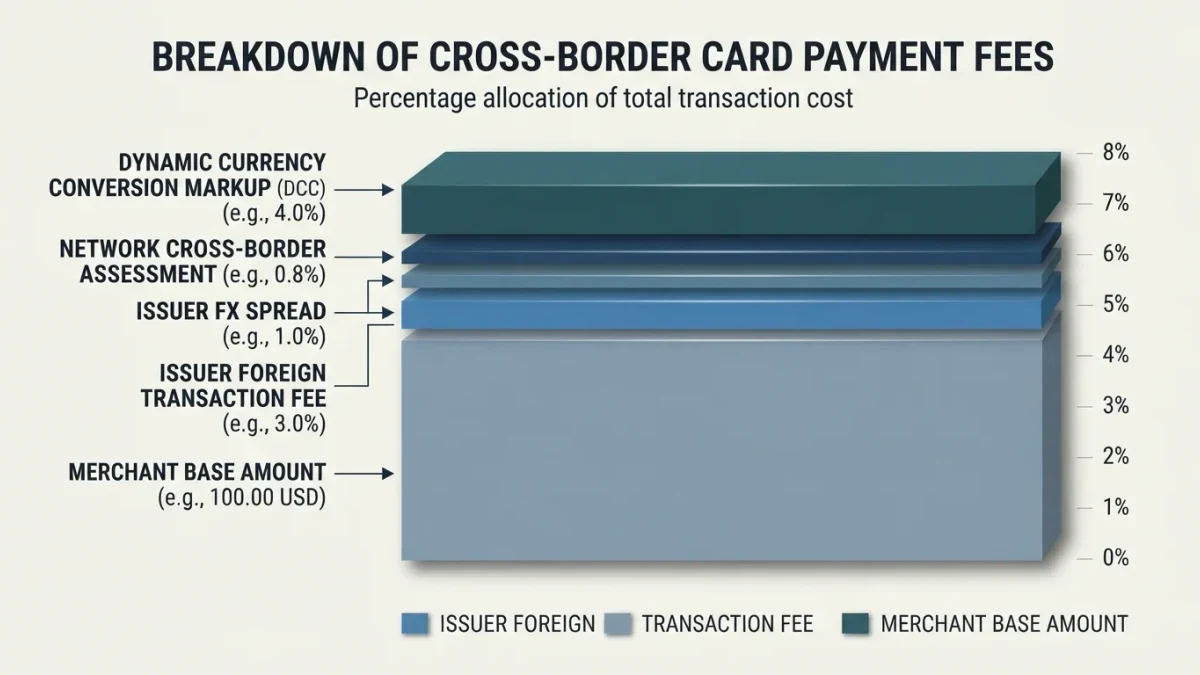
A card payment settles through four parties, and interchange is the transfer between two of them. When a customer taps a card, the payment travels from the merchant's terminal to the merchant's bank (the acquirer), across the network's rails (Visa, Mastercard, or, for debit from small banks, potentially a regional network), to the bank that issued the customer's card (the issuer). The issuer deducts interchange from the amount it sends back. The acquirer keeps its own markup, the network keeps its assessment, and the merchant receives what is left.
The merchant's all-in cost is therefore interchange plus the acquirer's markup plus network assessments. When a processor advertises "flat-rate" pricing, it is bundling all three into one number — typically a higher one than a large merchant pays unbundled.
Why are debit and card interchange rates different?
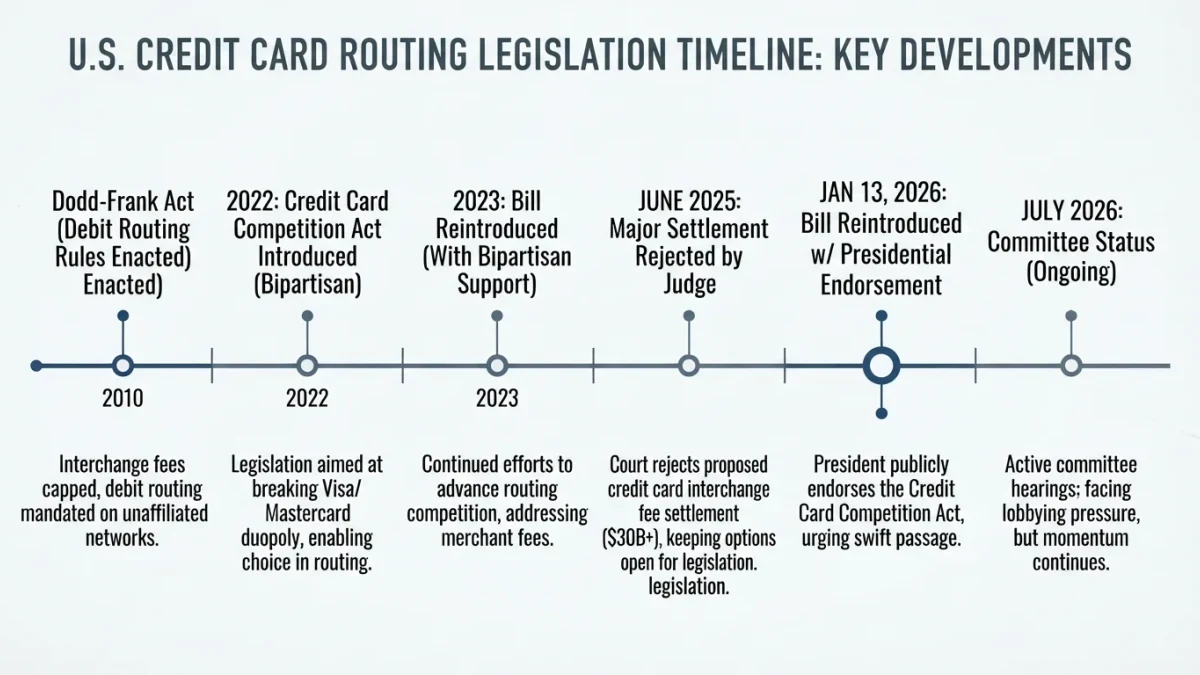
Because Congress separated them. The Durbin Amendment, part of the 2010 Dodd-Frank Act, capped debit interchange for banks with more than $10 billion in assets at 21 cents plus 0.05% of the transaction, plus a 1-cent fraud-prevention allowance for eligible issuers. Banks below the threshold are exempt and can charge unregulated rates, which is why small-bank debit cards still earn meaningfully more interchange per transaction than large-bank cards doing the same thing.
Credit interchange has no statutory cap. Networks publish dozens of credit rate tiers by merchant category, card type, and transaction size, and adjust them in scheduled updates. Card-not-present transactions — online sales — generally price higher than in-person ones because fraud risk is higher.
What did Regulation II change for merchants?
The Federal Reserve's Regulation II implements Durbin, and its 2011 original let issuers enable only one unaffiliated debit network per authentication method. The Fed's July 2022 amendment required issuers to enable at least two unaffiliated networks for card-present and card-not-present transactions respectively, giving merchants a second routing path and, in principle, pricing leverage. Issuers had until April 2023 to comply, per the Federal Reserve's rule text.
The amendment matters most online. Before it, many debit cards could not route over a second network for e-commerce at all; after it, merchants gained the technical ability to route online debit over a cheaper network, though many acquirers took months to build the routing logic.
Where does the merchants' argument stand?
Merchants' groups have argued for years that US interchange is among the highest in the world and that network rate increases during the pandemic years raised costs without a matching rise in fraud losses. Networks respond that interchange funds rewards programs and fraud protection that make cards usable at all merchants. Both claims are advocacy positions; the published rate schedules are the only part not in dispute.
Visa and Mastercard have periodically proposed settlement terms in the long-running merchant class-action litigation over interchange, and proposed rate changes have repeatedly been paused while regulators, including the Capitol Hill committees with Durbin jurisdiction, weigh in. Any figure in that dispute should be read as a proposal, not an effective rate.
What should a merchant actually check?
Three line items, from the merchant's own statement rather than a processor's marketing page:
- Interchange, listed by card type and transaction, matching the network's published schedule categories.
- The acquirer markup, which is the only part a merchant can negotiate.
- Network assessments, small percentages fixed by Visa and Mastercard for everyone.
What the schedules establish is who sets each component and how it is calculated. What they cannot establish is whether a given processor's bundled quote is competitive for a specific merchant's mix of card types — that depends on the merchant's own statement, and comparing it is the merchant's work, not something this publication can do from here.