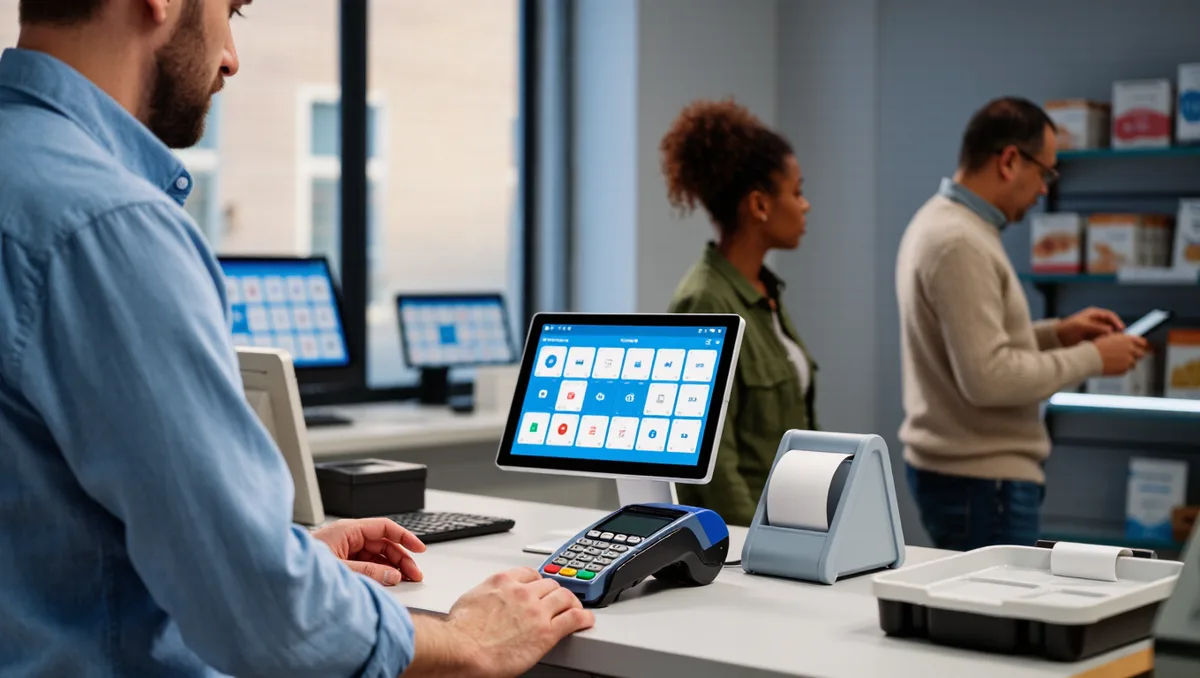

Digital banking is banking done through an app or website instead of a branch. You open the account, move money, deposit checks, and contact support on a screen. The money sits in a real, regulated bank; only the front door has changed.
The term covers two different things, and the distinction matters when you pick where to put your paycheck. Some traditional banks now offer full digital service. Others are digital-only institutions, often called neobanks, that have no branches at all. Knowing which kind you are dealing with tells you who holds your deposit and how it is protected.
Even the word itself is older than the industry. The Free Dictionary defines digital as information expressed in discrete numerical form for use by a computer, which is exactly what a banking app is: your balance, payments, and statements rendered as data rather than paper.
What is digital banking in practice?
In practice, digital banking means the full set of account tasks run remotely. That includes opening an account with an ID photo and a selfie, checking balances, paying bills, sending transfers, depositing checks by photographing them, freezing a lost card, and chatting with support. If you never need to visit a building to run your account, you are banking digitally.
Wikipedia lists a digital bank as a form of financial institution in its entry on the term digital, which is a fair shorthand: the institution is the same species as any bank, but it delivers its service through software. The regulatory plumbing behind it, from deposit-taking to payment processing, still runs on licensed banking infrastructure.
For businesses, the same applies with more moving parts. Digital business banking typically adds invoicing, expense cards for staff, accounting software connections, and role-based access so an owner can control who sees what. The core promise is identical: do the work of a bank branch from a laptop on a Tuesday afternoon.
How is it different from online banking?
The two terms overlap, but they are not the same. Online banking, in the traditional sense, is a website bolted onto a branch bank. You can check your balance and pay bills online, but the bank's real work, cash handling, loans, complex accounts, still happens at a desk.
Digital banking goes further. The account is designed to be run entirely on a screen, and the institution is often built around that assumption. Pricing, product design, and customer support all assume you will never walk in. A traditional bank's website is a convenience; a digital bank's app is the bank.
There is a middle category worth knowing: fintech apps that look like banks but are not chartered banks. They partner with a licensed bank that actually holds the deposits. That structure is legal and common, but it changes who is responsible if something goes wrong, which is why it pays to read the fine print on who the partner bank is. Our explainer on how neobanks without charters move and insure customer money walks through that arrangement in detail.
What features should you expect?
A competent digital bank should offer a baseline set of capabilities. If several are missing, treat that as a signal about the institution's maturity rather than a design choice.
- Full account opening on the app, with identity verification built in
- Instant card controls: freeze, unfreeze, set limits, and report a card lost
- Real-time notifications for every transaction, so fraud surfaces in minutes
- Free bill pay and fast transfers between accounts
- Mobile check deposit with clear hold policies
- Human support reachable in-app, not only a chatbot
- Clear fee disclosure, especially for overdrafts and out-of-network withdrawals
Businesses should expect a few more: multi-user permissions, integration with accounting tools, and clean statements an accountant can reconcile without hand-holding. A sleek interface that cannot produce a proper month-end statement fails the Tuesday-afternoon test.
What should you check before choosing a digital bank?
Start with the charter. Ask who the licensed bank behind the account is. If the app itself holds a banking licence, deposits are covered by that bank's deposit insurance. If it partners with one, the coverage depends on the partner. Our guide to how deposit insurance protects your money when banks fail explains what that protection does and does not cover.
Next, look at how the bank makes money. Many digital banks earn from interchange fees on card spending rather than account fees, which is why some can offer no monthly charge. Others lean on deposit spreads. Understanding the model helps you predict where fees will appear later. Our breakdown of how banks actually make money covers both engines.
Then compare rates with intent. Online-only banks can pay more on savings because they carry no branch network cost, a trade-off we examine in why online banks pay more on savings than branch networks. A higher rate is real value, but only if the account otherwise fits how you actually use money.
Finally, test the failure paths before you need them. How does the app handle a frozen card abroad? How fast does support answer when a transfer goes missing? Reviews help, but the honest answer is that most people find out under stress. Choose an institution whose backup plans are documented, not just advertised.
What are the real trade-offs?
Digital banking trades physical services for speed and price. You gain instant controls, better visibility, and often lower fees. You give up cash handling, in-person problem solving, and the ability to deposit coins. If your financial life involves regular cash, a hybrid approach, a digital account plus access to an ATM network or a small local account, is a common and sensible arrangement.
There is also a resilience question worth naming plainly. Apps go down. Outages are rare but not unknown, and a customer whose only banking channel is a single app has a single point of failure. Keeping a second account elsewhere, even a minimal one, is cheap insurance.
Where digital banking is heading
Two forces are reshaping the category. The first is open banking: regulated ways for apps to share account data and initiate payments with your permission, which lets digital banks plug into a wider financial ecosystem. The second is faster payment rails, which shrink the waiting time between 'money sent' and 'money arrived'. Both push digital banking from a convenience toward the default way money moves.
None of this changes the fundamentals. A good digital bank is still a regulated institution that holds your money safely, prices its services honestly, and works when you need it. The screen is the difference; the trust is not.
What this means for your next account
If you are choosing between a digital bank and a traditional one, the decision is less about technology than about fit. Check the charter and deposit protection, read the fee schedule rather than the marketing page, and match the features to how you actually spend, save, and get paid. The best digital bank is the one whose app you rarely have to think about, because it simply works.