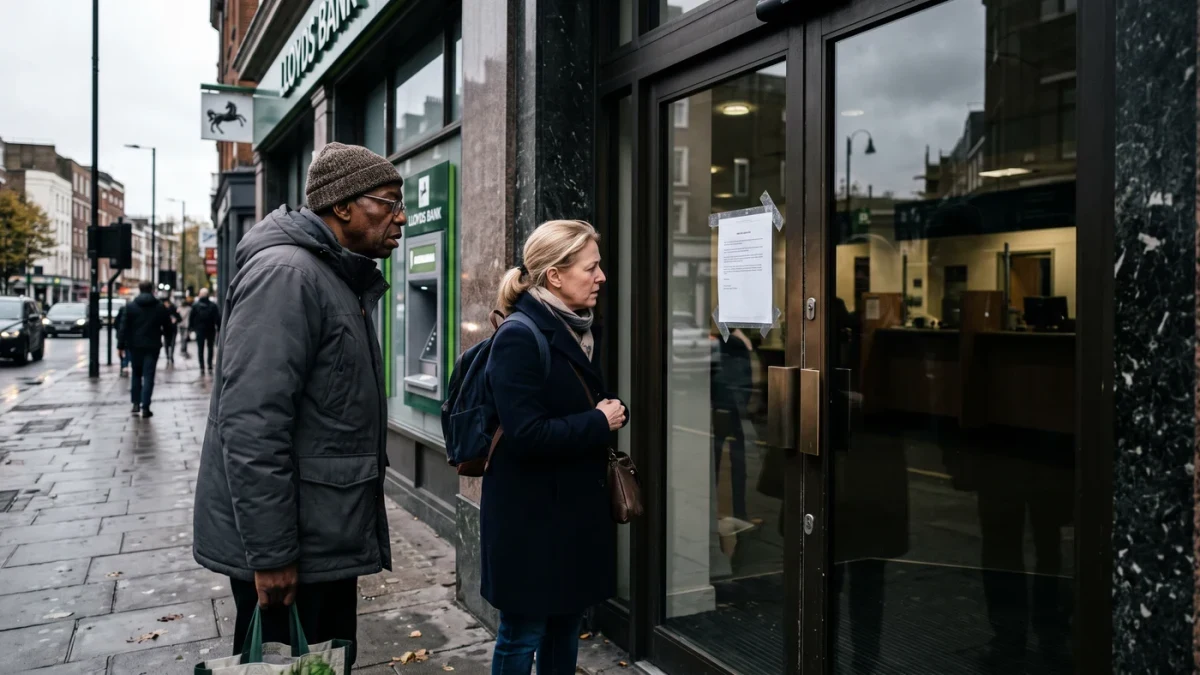

Most US neobanks hold no bank charter: Chime, which went public in June 2025, places customer deposits with partner banks including The Bancorp Bank and Stride Bank, per its disclosures. In June 2024, the Federal Reserve entered a cease-and-desist order against BaaS provider Evolve Bank & Trust over anti-money-laundering deficiencies.
Nuv Media publishes information, not financial advice.
Whose Balance Sheet Actually Holds the Deposits?
The partner bank's does. In the standard banking-as-a-service arrangement, the fintech builds the app, the brand, and the customer relationships, while a chartered, FDIC-insured bank holds the deposits, issues the debit cards, and runs the regulatory ledger. Legally, the customer is a depositor at the partner bank; commercially, the customer thinks they are banking with the app.
The fintech is a program manager and service provider, not a bank. It earns interchange and subscription revenue without capital requirements, and it can move fast precisely because the regulated entity — with its capital, examination schedule, and compliance obligations — sits behind the interface. Every function that touches money ultimately routes through that chartered institution.
How Does FDIC Pass-Through Insurance Work?
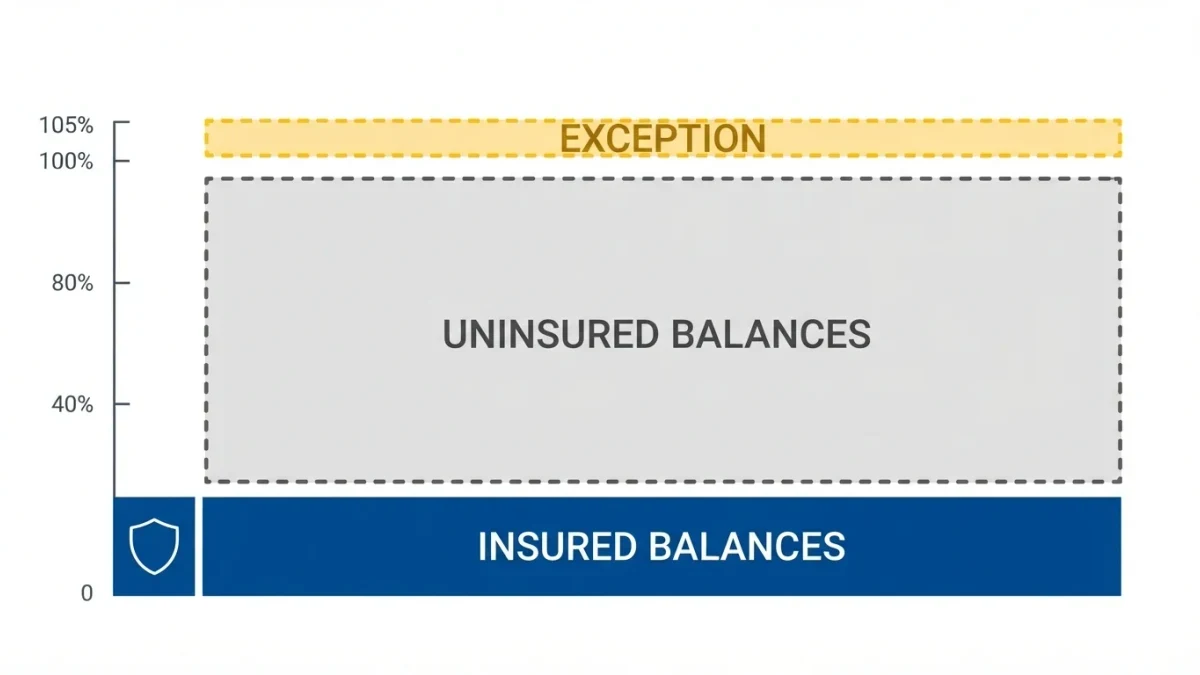
Pass-through insurance is the mechanism that lets the end customer count as a depositor at the partner bank. The FDIC's rules require three things: the funds must be placed at the insured bank in accordance with the depositor's instructions, the bank's or custodian's records must identify each beneficial owner's balance, and the account must be titled to reflect the custodial arrangement. When those conditions hold, insurance passes through the intermediary to the customer, up to 250,000 dollars per depositor, per bank, per ownership category.
The conditions are the whole game. Insurance attaches to records, not to marketing — an app's claim that deposits are FDIC insured is only as good as the ledger tying each balance to a named depositor at a named bank. And because coverage aggregates per bank, sweep programs that spread deposits across several partner banks can extend coverage, but only if each bank's records correctly attribute the balances.
What Did the Synapse Collapse Expose?
In 2024, the fintech processor Synapse, which sat between consumer apps and Evolve Bank & Trust, collapsed into bankruptcy after a reconciliation dispute left end-user funds frozen — customers of apps including Yotta and Juno lost access to balances for extended periods, with reconciliation and payouts continuing into 2025. The deposits sat at an insured bank throughout; what broke was the record-keeping between the app layer and the bank layer.
The episode demonstrated the model's real failure mode. Pass-through insurance answers the question of whether the bank failed; it does not answer whether the intermediary's ledger matches the bank's. When those ledgers disagree, customers face not a bank run but an accounting reconciliation — slower, quieter, and outside the FDIC's deposit-payout playbook.
What Pressure Are Regulators Putting on BaaS?
The pressure lands on the banks, because that is where jurisdiction exists. The Federal Reserve's June 2024 cease-and-desist order against Evolve Bank & Trust cited deficiencies in anti-money-laundering and risk-management practices, including oversight of its fintech partnerships. Evolve subsequently brought in new leadership, naming former FDIC official Bob Hartheimer as chief executive in August 2025, per company announcements.
The supervisory logic is simple: a partner bank cannot outsource accountability. Interagency third-party risk guidance makes clear that banks answer for the programs their partners run — for KYC quality, for funds-flow reconciliation, and for the accuracy of the records that pass-through insurance depends on. Enforcement in 2024 and 2025 concentrated on exactly those seams.
Why Do Some Neobanks Get Their Own Charters?
A charter moves the balance sheet in-house. Varo Bank received a national bank charter from the Office of the Comptroller of the Currency in 2020, becoming the first US consumer neobank to hold its own — deposits sit on Varo's own books, with direct supervisory relationships and the capital requirements that come with them.
The trade is control for capital. A chartered neobank answers to examiners directly, holds its own capital and liquidity buffers, and can build its own deposit franchise — but it gives up the asset-light economics that make unchartered neobanks attractive to investors. That is why the industry default remains the partner-bank model, even as the largest players go public on top of it.
What Should Operations Teams Verify?
Three checks, all mechanical. Confirm the partner bank: the disclosure is in the app's terms, and the FDIC's BankFind Suite confirms the insurance certificate. Distinguish insured from protected: FDIC insurance covers bank failure, not fintech insolvency, and cash held in investment-side features follows different rules. And trace funds flow: which entity moves the money, which bank reconciles it, and what the ledger says each beneficial owner holds.
Sweep arrangements deserve a closer look than the marketing gives them. A program that spreads balances across several partner banks can extend effective coverage, because the 250,000 dollar limit applies per bank — but each bank must hold records that attribute every slice to the right beneficial owner, and the customer must be able to see where the money actually sits. When a program sweeps deposits through an intermediary's omnibus structure, the questions that mattered in the Synapse reconciliation — whose ledger is authoritative, and how quickly it can be rebuilt — come back into scope.
Those checks matter most at scale. Corporate and payroll exposure through fintech programs sits behind the same 250,000 dollar per-bank line as any other deposit, and the Synapse freeze showed that access disputes do not follow the neat timelines of a bank resolution. The model is sound when the records are; the operational risk lives in the seams.