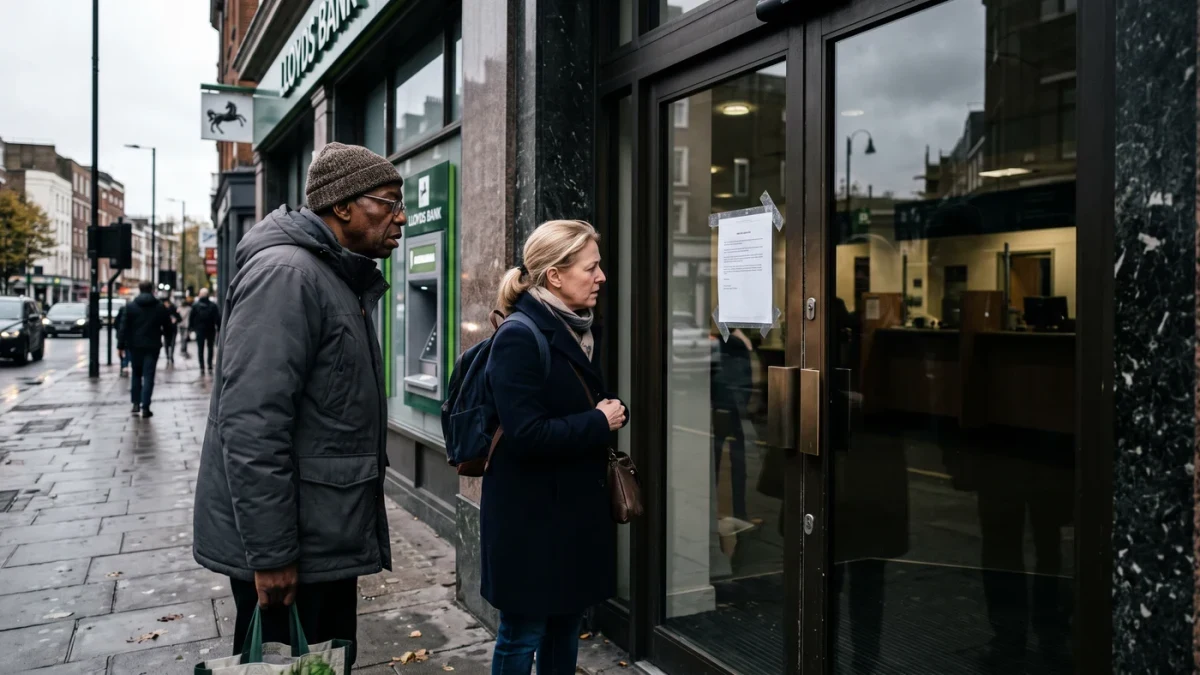

When a bank closes on a Friday, the FDIC works the weekend toward a stated goal of making insured deposits available within two business days. The sequence ran live in April 2024: Republic First Bank failed on April 26, and Fulton Bank assumed its deposits the same day, per the FDIC's resolution announcement.
Nuv Media publishes information, not financial advice.
Who Takes Over When the Doors Close?
The bank's chartering authority — a state regulator or the Office of the Comptroller of the Currency — closes the institution and appoints the FDIC as receiver. As receiver, the FDIC steps into the bank's shoes: it takes control of assets, winds down the estate, and pays claimants in statutory order. Failures are usually scheduled for Friday evening precisely to buy a weekend of uninterrupted work.
Receivership is not bankruptcy. The Federal Deposit Insurance Act gives the FDIC broad powers to transfer assets, sell the franchise, or charter a temporary bridge bank overnight, without a court schedule. That authority is what compresses a multi-year corporate liquidation into a 48-hour operational sprint.
How Do Insured Depositors Get Their Money?
Insured deposits are the first priority, and the FDIC's stated goal is availability within two business days. In practice, the dominant method is a purchase and assumption agreement: a healthy bank buys the failed bank's deposits, and customers simply wake up with accounts at the assuming bank. Republic First in April 2024, and Silicon Valley Bank's sale to First Citizens in March 2023, both took that route, per FDIC announcements.
When no buyer bids, the FDIC pays insured balances directly. After Silicon Valley Bank failed on March 10, 2023, the FDIC created the Deposit Insurance National Bank of Santa Clara so insured depositors could access their funds the following Monday, before First Citizens assumed the franchise on March 27, per FDIC press releases. Direct deposit streams and scheduled payments transfer with the deposits.
What Happens to Uninsured Deposits?
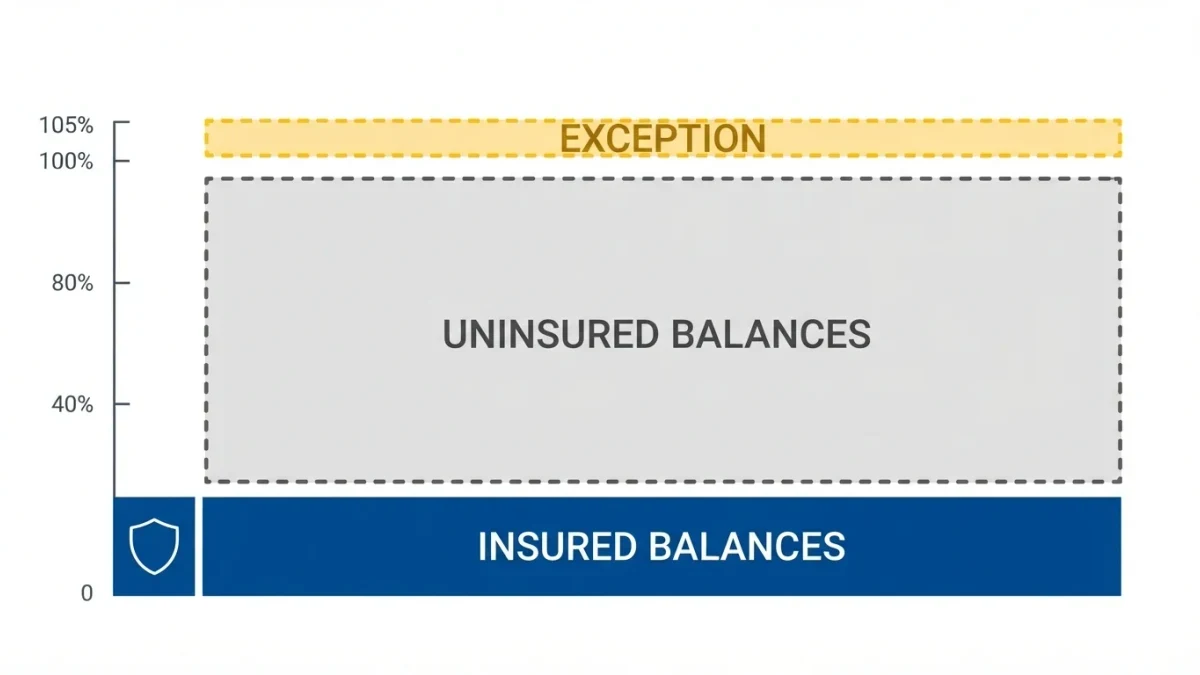
Uninsured balances become claims against the receivership. Depositors receive receivership certificates, and they are paid dividends as the FDIC liquidates assets. Deposit liabilities rank ahead of general unsecured creditors under the Federal Deposit Insurance Act's claims-priority waterfall, so depositors recover before bondholders and shareholders see anything.
Recovery is not always slow. At SVB and Signature Bank in March 2023, the FDIC began paying advance dividends on uninsured balances within weeks, per FDIC statements at the time. And on March 12, 2023, the FDIC, the Federal Reserve, and the Treasury invoked the systemic risk exception and guaranteed all deposits at both banks — a decision reserved for cases where a failure is judged to threaten the financial system.
Who Else Lines Up in the Receivership?
The statutory order runs: administrative expenses of the receivership, then deposit liabilities, then other general and senior liabilities, then subordinated debt, then shareholders. Secured creditors stand apart, taking their collateral. The FDIC publishes the rules, and every claimant — from a payroll processor to a municipal depositor — sits somewhere on that ladder.
That ranking is why uninsured depositors usually recover most of their money in a large resolution: the asset base covers deposit claims before junior claims absorb losses. It is also why the 2023 systemic risk exception was controversial — it moved the safety line after the fact, rather than letting the waterfall run.
What Did Recent Failures Actually Look Like?
The 2023 cycle set the modern template. SVB failed March 10 and Signature on March 12, 2023; Flagstar Bank assumed Signature's deposits that month, and First Citizens assumed SVB's on March 27, per FDIC announcements. First Republic was closed on May 1, 2023, and JPMorgan Chase acquired substantially all of its assets and deposits the same day, per the FDIC.
Smaller failures follow the same mechanics at lower cost. Republic First Bank's April 2024 resolution left an estimated 667 million dollar charge to the Deposit Insurance Fund, per the FDIC's April 2024 announcement. The fund itself is industry-funded through quarterly assessments, backed by a statutory minimum reserve ratio of 1.35 percent of insured deposits, with the FDIC's long-run target at 2 percent.
How Do Payments Keep Flowing Over the Weekend?
Payment continuity is engineered alongside deposit access. Incoming ACH credits and direct deposits are redirected to the assuming bank or the FDIC-chartered depository institution, so payrolls scheduled for the following week still post. Checks drawn on the failed bank continue to clear up to normal limits, and debit cards keep working — the FDIC treats continuing customer-facing payment services as part of the resolution, not an optional extra.
Wire operations are the exception. Outgoing wires stop at failure, because the failed institution loses access to settlement systems, and high-value counterparties must re-route payments manually. This is one reason corporate treasury teams hold backup operating accounts: the two-business-day guarantee covers deposit balances, while payment access depends on which resolution structure the weekend produces.
What Does the FDIC Actually Guarantee?
The standard insurance limit is 250,000 dollars per depositor, per bank, per ownership category. Coverage is automatic up to that line, and the FDIC notes that no depositor has lost insured funds since insurance began in 1934. Amounts above the limit participate in the receivership, which is the entire logic of the weekend: insured money is engineered to move at the speed of an announcement, uninsured money moves at the speed of liquidation.
For operations teams, the 48 hours translate into concrete tasks: verify counterparty exposure, confirm payroll and direct-deposit continuity, and identify which balances crossed the insurance line. The banks that fared worst in 2023 were those that discovered their uninsured concentrations at the same moment their depositors did.