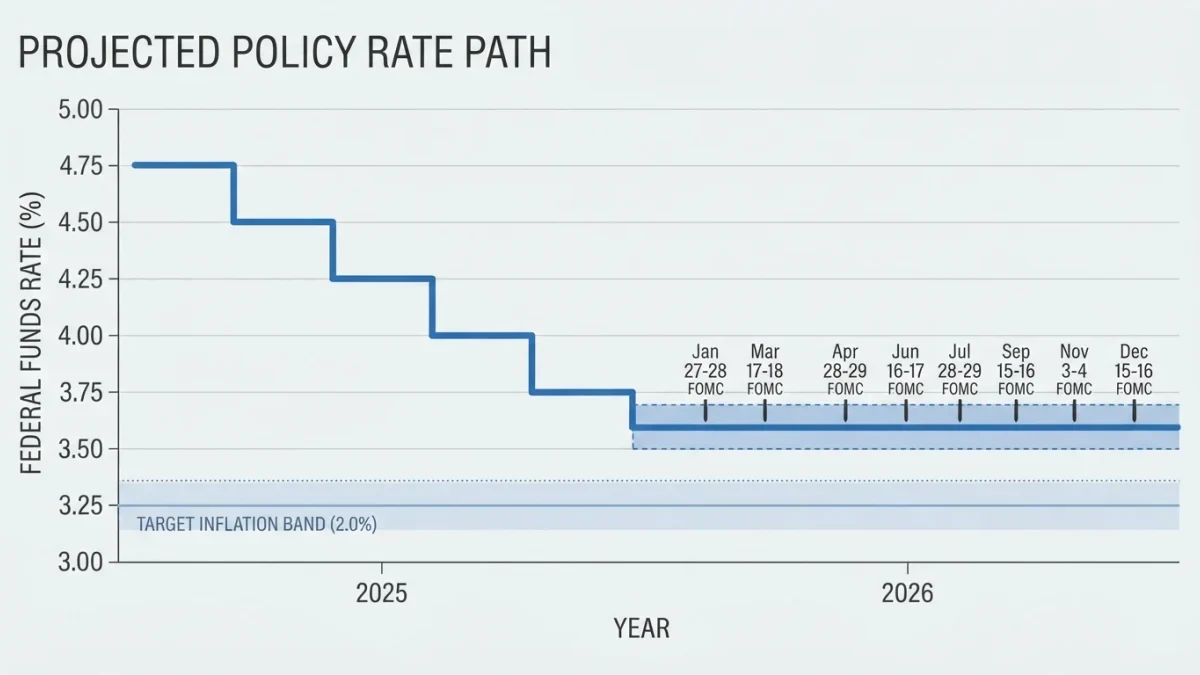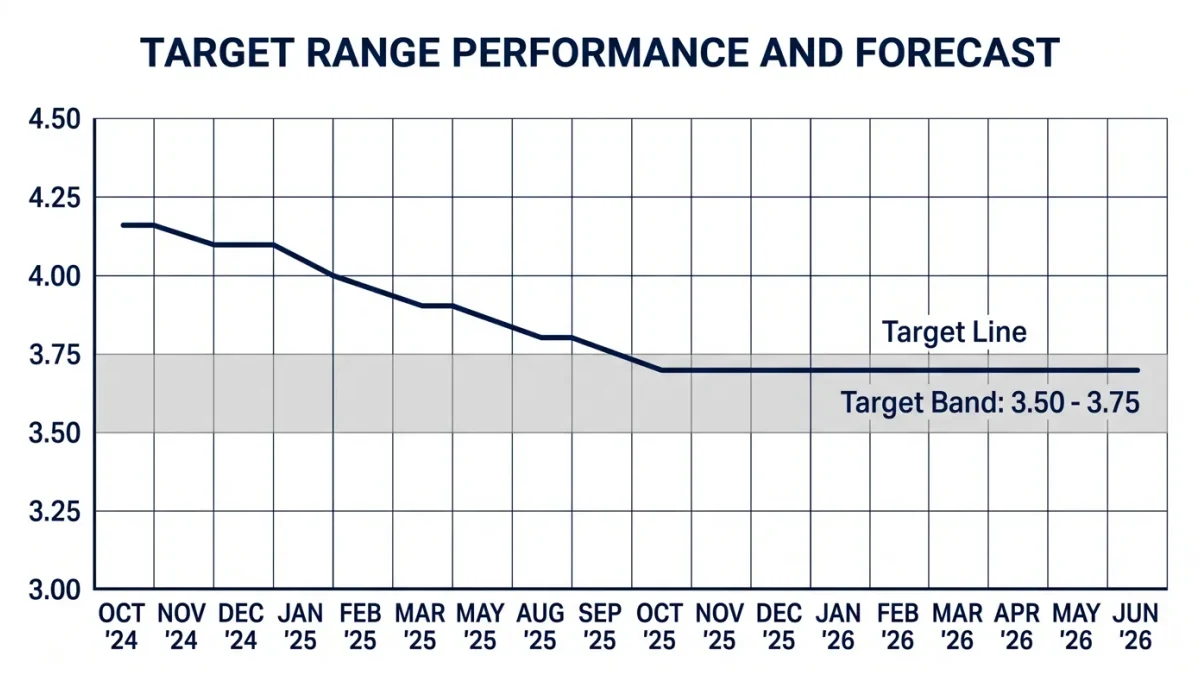
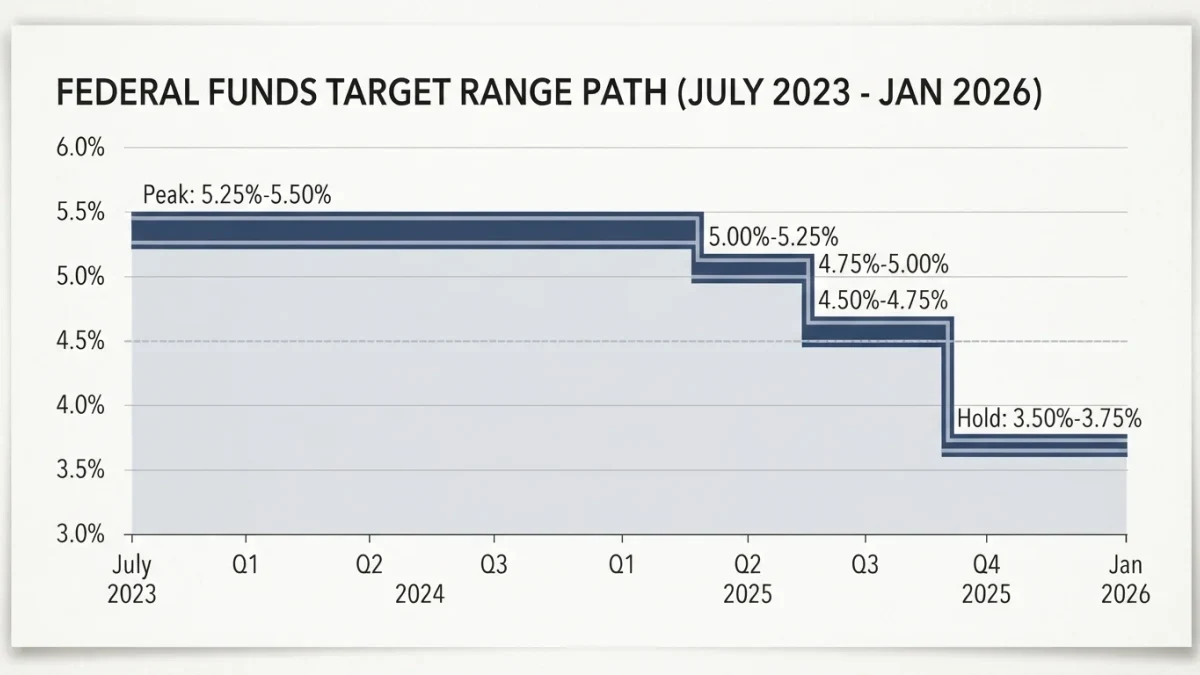
The Federal Reserve kept the federal funds target range at 3.50%-3.75% on January 28, 2026, its first decision of the year (Federal Reserve, January 28, 2026). The vote passed 10-2, with governors Stephen Miran and Christopher Waller dissenting in favor of a quarter-point cut. Markets had priced a hold at close to 100% going into the announcement (per CNN, January 28, 2026).
Nuv Media publishes information, not financial advice.
What Exactly Did the FOMC Decide?
The Committee held the target range steady at 3.50%-3.75%, the setting reached after the December 10, 2025 reduction (Federal Reserve, 2025). Per CNN's January 28, 2026 coverage, it was the first hold since the July 2025 meeting, following cuts in September, October and December. Products indexed to the prime rate carry over at existing levels until banks reprice them.
That makes January a pause in sequence, not a reversal. The range now in force was set in three quarter-point steps during the second half of 2025, and the January statement leaves that landing zone untouched for at least one more meeting cycle.
What Did the Statement Say?
The assessment of the economy was two-sided. Economic activity, in the Committee's words, "has been expanding at a solid pace," while "job gains have remained low" and unemployment "has shown some signs of stabilization" (Federal Reserve, January 28, 2026).
On prices, the statement described inflation as "somewhat elevated" and reiterated that the Committee is "strongly committed to returning inflation to its 2 percent objective." The risk language was unchanged in tone: "uncertainty about the economic outlook remains elevated," with the Committee "attentive to the risks to both sides of its dual mandate."
Read together, the paragraph pair explains the hold without editorializing: growth holds up, the labor market has softened but stabilized, and inflation has not yet closed the gap to target. Nothing in the text commits the Committee to a direction for March.
Who Dissented, and Why It Matters
Stephen Miran and Christopher Waller, both members of the Board of Governors, preferred to lower the target range by a quarter point at this meeting (Federal Reserve, January 28, 2026). The decision otherwise passed 10-2, with Chair Jerome Powell, Vice Chair Philip Jefferson and the rotating regional presidents in the majority.
The composition is the notable part. Both dissents came from Washington-based governors rather than regional bank presidents, and both pointed the same direction - toward easing - on a day when the majority chose to wait. For payments and banking professionals, an explicit two-vote easing bloc is a data point about the Committee's reaction function as 2026 begins, nothing more.
What Happens Next on the Calendar?
The next scheduled FOMC meeting is March 17-18, 2026, per the Federal Reserve's published 2026 calendar. Under the Fed's usual schedule, the Summary of Economic Projections accompanies the March, June, September and December meetings, so the January decision arrived with no updated dot plot or rate projections to react to.
This article describes a decision already taken. It makes no forecast for March, and nothing here is a recommendation about borrowing, deposits or investment timing.