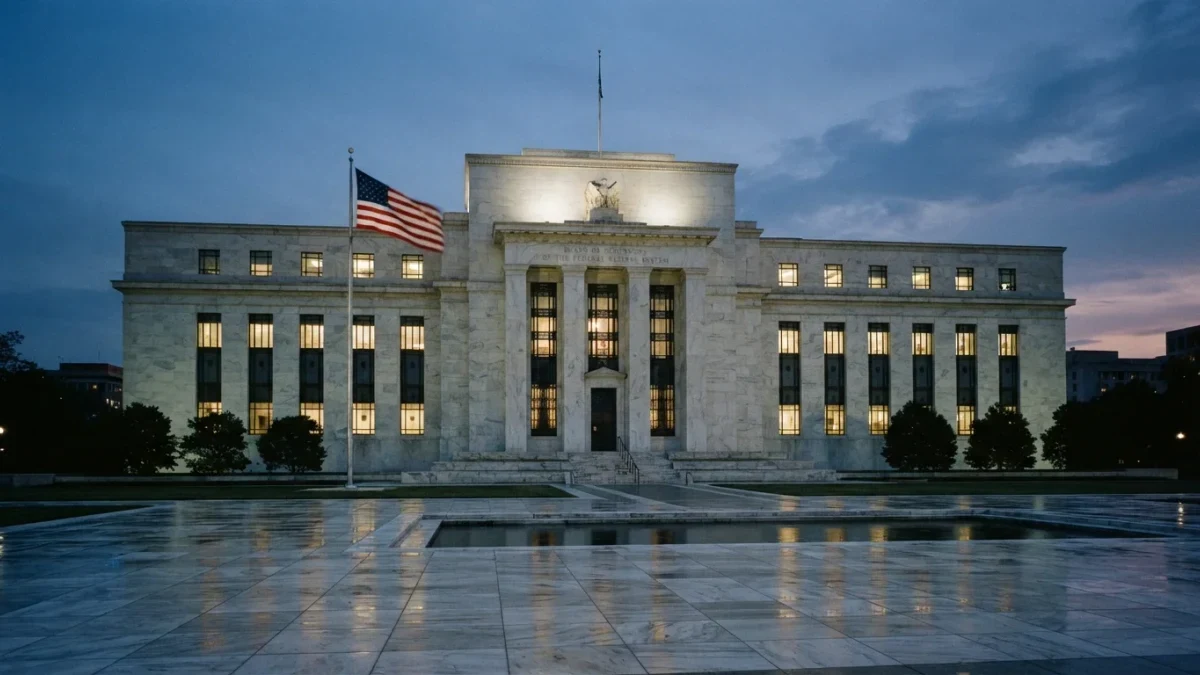
The Federal Reserve maintained its federal funds target range at 3.50%-3.75% on June 17, 2026, approving the decision 12-0 with no dissents (Federal Reserve, June 17, 2026). The accompanying Summary of Economic Projections put the median year-end 2026 rate at 3.8%, with median PCE inflation at 3.6% for 2026 falling to 2.3% in 2027 (Federal Reserve SEP, June 17, 2026). The range has now stood since December 10, 2025.
Nuv Media publishes information, not financial advice.
What Did the Committee Decide?
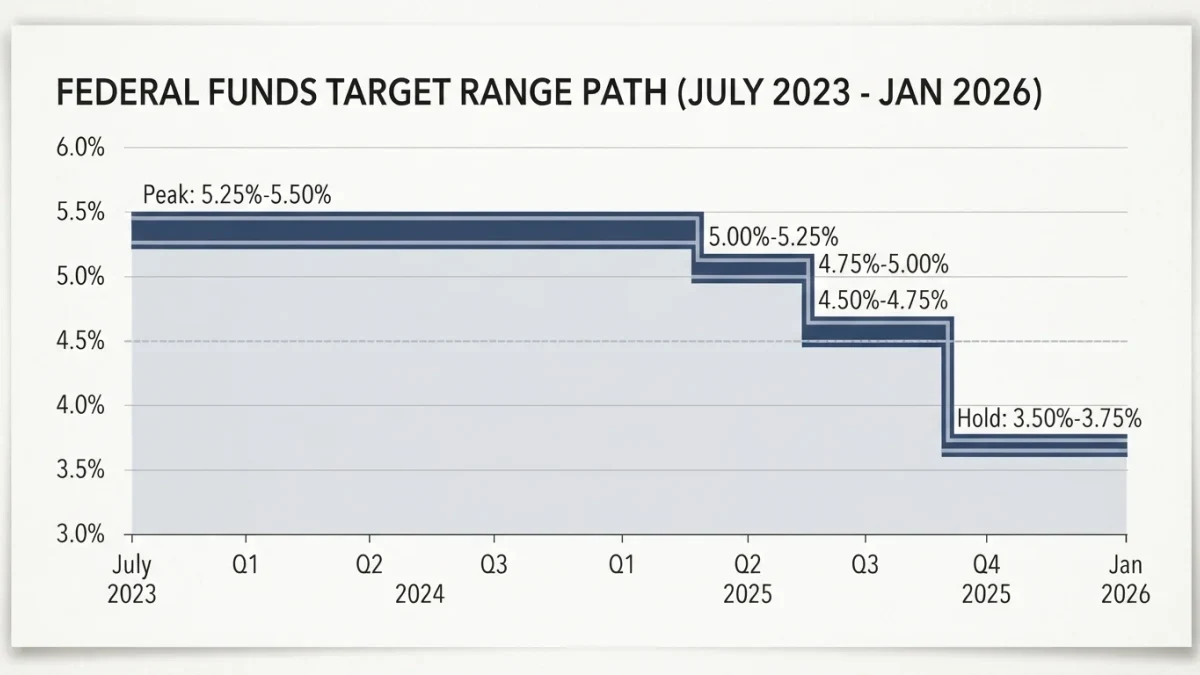
A fifth consecutive hold. The target range was set at 3.50%-3.75% by the December 10, 2025 cut and maintained at the January 28, March 18 and April 29 meetings before June (Federal Reserve, 2025-2026). What changed in June was not the rate but the vote: 12-0, against 8-4 in April, when Stephen Miran sought a cut and Hammack, Kashkari and Logan objected to the statement's easing bias.
Unanimity after that split is the signal in the headline number. A committee that could not agree on direction in spring agreed in summer - on holding, at a range roughly two points below the 2023 peak of 5.25%-5.50%.
What Did the Statement Signal?
The inflation language sharpened. Inflation remains elevated versus the 2% goal, the statement says, partly reflecting "supply shocks that have driven price increases in certain sectors, including energy" - and the Committee states it "will deliver price stability" (Federal Reserve, June 17, 2026). That wording tracks the energy spike visible in the March CPI report, where gasoline rose 21.2% in a month (BLS, April 10, 2026).
The growth assessment held up: activity expanding at a solid pace despite uncertainty tied in part to the Middle East conflict, job gains keeping pace with workforce growth, unemployment little changed. The Committee also reaffirmed its policy of maintaining ample reserves in the banking system.
What Does the June Dot Plot Show?
The median federal funds rate projection is 3.8% for the end of 2026, 3.6% for 2027, 3.4% for 2028, and 3.1% in the longer run (Federal Reserve SEP, June 17, 2026). The 2026 median sits at the top of the current 3.50%-3.75% range - meaning the median participant projects the policy rate ending the year essentially where it stands today.
The SEP is a survey of 19 participants' individual projections, not a committee commitment, and the medians smooth over a distribution of dots. What the document records as of June: a median participant sees rates near current levels through year-end 2026, with modest step-downs over the following two years toward a 3.1% longer-run neutral.
What Are the Growth and Inflation Projections?
Real GDP growth is projected at a median 2.2% for 2026 and 2.3% for 2027; the unemployment rate at 4.3% in both years. PCE inflation is projected at 3.6% for 2026 and 2.3% for 2027, with core PCE at 3.3% and 2.5% (Federal Reserve SEP, June 17, 2026).
The 2026 inflation medians are the numbers to watch against the incoming data. The CPI measure published by the BLS ran at 3.3% year over year in March with core at 2.6% (BLS, April 10, 2026) - a different index with different weights, but the same picture of headline inflation lifted by energy while underlying measures run lower.
What Should Professionals Take From the Package?
Three documented facts, no forecast. The policy rate is on hold at 3.50%-3.75% and has been since December 2025. The June vote was unanimous where April's was fractured. And the median participant's projection for end-2026 - 3.8% - equals the top of the current range, with the disinflation the Committee wants projected to arrive in 2027 (3.6% rate median, 2.3% PCE median).
The next scheduled meeting follows in late July, per the Federal Reserve's published 2026 calendar. What the Committee does there depends on data not yet released; this article reports what was decided and projected on June 17, and predicts nothing.