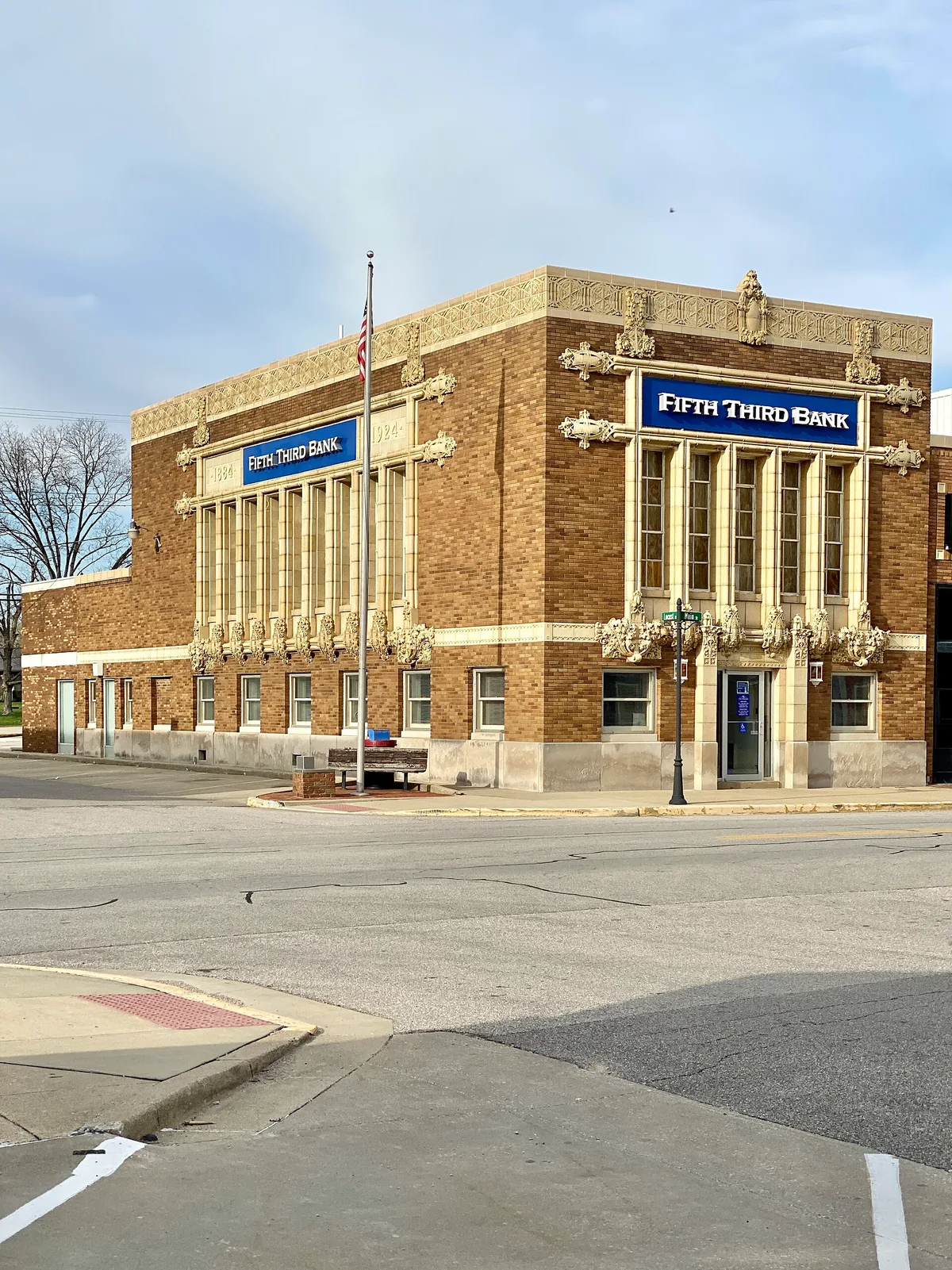
A branch, in the dictionary's plainest sense, is a division of a larger organization — a local operating unit of something much bigger than itself. In banking, that definition carries more weight than it looks. A small-town branch is a legal, operational and human extension of an institution headquartered somewhere the depositors will never visit. When a town's last branch stays open, the decision is rarely about that one building's profit and loss.
It is about what the branch carries that an app cannot. Cash in and cash out. A notarized signature. A face a loan officer recognizes. This piece looks at the mechanics of why small-town branches survive, who bears the cost of keeping them, and what their survival says about trust in a system that increasingly runs without buildings. For related coverage, see How FedNow Settles Instant Payments in Master Accounts, Now Capped at $10 Million.
The honest starting point: no single branch story proves anything about the industry. But the branch as a category has a logic, and that logic explains a lot about where digital banking still hits friction. This connects to our earlier piece, How Embedded Finance Puts Banking Inside Software Platforms Through Sponsor Banks.
What does a small-town branch actually do that an app cannot?
The core functions split cleanly. Digital channels move information well: balances, transfers, card controls, statements. Branches move paper, cash and judgment. A branch can take a wet signature on a document that requires one, hand a business owner strapped cash on a Friday afternoon, and accept a deposit that is not yet digitized — a check from a counterparty who still pays by mail, for instance.
The judgment part matters more and shows up less in product brochures. A loan decision made by someone who knows the borrower's business, their reputation in town, and whether the equipment on the collateral list actually runs — that is underwriting with information no credit file contains. Relationship lending is the industry's own term for it, and it depends on proximity. Remove the proximity and the information goes with it.
None of this makes branches efficient. It makes them useful in specific ways that are hard to price, which is exactly why their survival is a story about trade-offs rather than progress.
Who pays for a branch that loses money?
Someone always does, and naming that someone is the useful part of any small town bank story. The candidates are the institution's other customers, its shareholders, or the town itself in lost access. A branch's direct costs are visible: the lease, the vault, the staff, the cash-handling and security overhead. Its revenue is deposits gathered and loans referred.
Institutions that keep thin branches open usually justify it one of three ways. Deposits gathered at a branch may fund lending elsewhere, so the building is a funding machine rather than a profit center. The branch may anchor a market position the institution values for reasons of charter, regulator relationships or community-reinvestment posture. Or leadership may simply judge that the reputational cost of pulling out of the last bank in town outweighs the operating loss — a judgment about trust, priced in dollars.
That third reason is the interesting one. It is an admission that the relationship between a bank and a town is not purely transactional, and that the institution knows it.
Why does trust concentrate around a physical building?
Trust in banking is unusual because the customer cannot verify much directly. A depositor cannot audit the loan book. What they can do is watch behavior over time: did the teller catch the fraud attempt, did the manager call before the payment bounced, did the institution show up when the tornado did. A branch makes that behavior observable. It turns an abstract counterparty into people with names.
This is also why branch closures land harder than their economics suggest. When the building leaves, the observable behavior leaves with it. What replaces it is a call center, a chat window, and terms of service. For customers with the skills and patience to navigate those, the trade is often fine. For customers who do not — older residents, cash-dependent small businesses, people without reliable broadband — the closure removes the only channel they trusted.
The pattern to watch is not sentimentality. It is information asymmetry. The branch was where the customer's side of the asymmetry got a little smaller. Nothing in the digital stack has fully replaced that function yet.
What replaces a branch when it closes — and what does not?
The substitution is real but partial, and it runs through several distinct mechanisms rather than one.
- Mobile and online banking absorb the informational traffic: balances, transfers, alerts. This part of the transition is largely settled for customers who adopt it.
- ATM networks and cash-back at retailers absorb some cash access, but neither can take a commercial cash deposit in the volume a branch vault can, and neither can order currency for a weekend event.
- Shared branching and credit-union networks give some depositors a physical fallback, though coverage is uneven and the counterparty is a different institution.
- Instant payment rails change what customers need a branch for in the first place. As our explainer on How FedNow Settles Instant Payments in Master Accounts shows, settlement itself is moving off the branch's schedule entirely.
- Embedded models push the front end into software. As covered in How Embedded Finance Puts Banking Inside Software Platforms Through Sponsor Banks, the bank becomes infrastructure the customer never sees — which solves distribution and deepens the trust problem, because the visible brand is no longer the regulated entity holding the money.
What does not get replaced is the human judgment function described earlier, at least not at scale. Fraud intervention, complex estate matters, contested document execution — these still route to a person with authority, and increasingly that person is a phone call to a region far away.
What this means for the towns and the institutions
Our analysis, read from the mechanics rather than from any single story: a surviving last branch is a signal, not a guarantee. It signals that an institution has decided the unpriced value of presence exceeds the priced cost of the building. That decision can reverse with a management change, a merger, or a bad quarter. Towns that treat a surviving branch as permanent are misreading the balance sheet it sits on.
For institutions, the durable lesson is that the branch's value was never the marble. It was the observable, local, accountable behavior the building made possible. Digital channels can replicate the transactions. Whether they can replicate the accountability is the open question this whole category of story keeps asking, and the honest answer is that the evidence is still coming in.
The dictionary definition holds: a branch is a division of something larger. The small-town version survives because, for some customers in some places, the larger thing is not yet reachable any other way. When that stops being true, the branch closes — and the trust it concentrated has to find a new home.