
Buy now, pay later splits a purchase into a handful of installments, with the first due at checkout. Five large lenders surveyed by the CFPB originated $24.2 billion of these loans in 2021, up from $8.3 billion in 2020. The regulatory footing of the product has moved just as fast.
Terms vary by lender, and the federal picture changed twice in two years. A 2024 interpretive rule treated BNPL digital accounts like credit cards under Regulation Z. The Bureau withdrew that guidance in May 2025. Card-side readers can map the dispute mechanics in how chargebacks work and what merchants can contest; product-level moves land on the fintech news desk.
Buy Now Pay Later Explained: The Core Mechanics
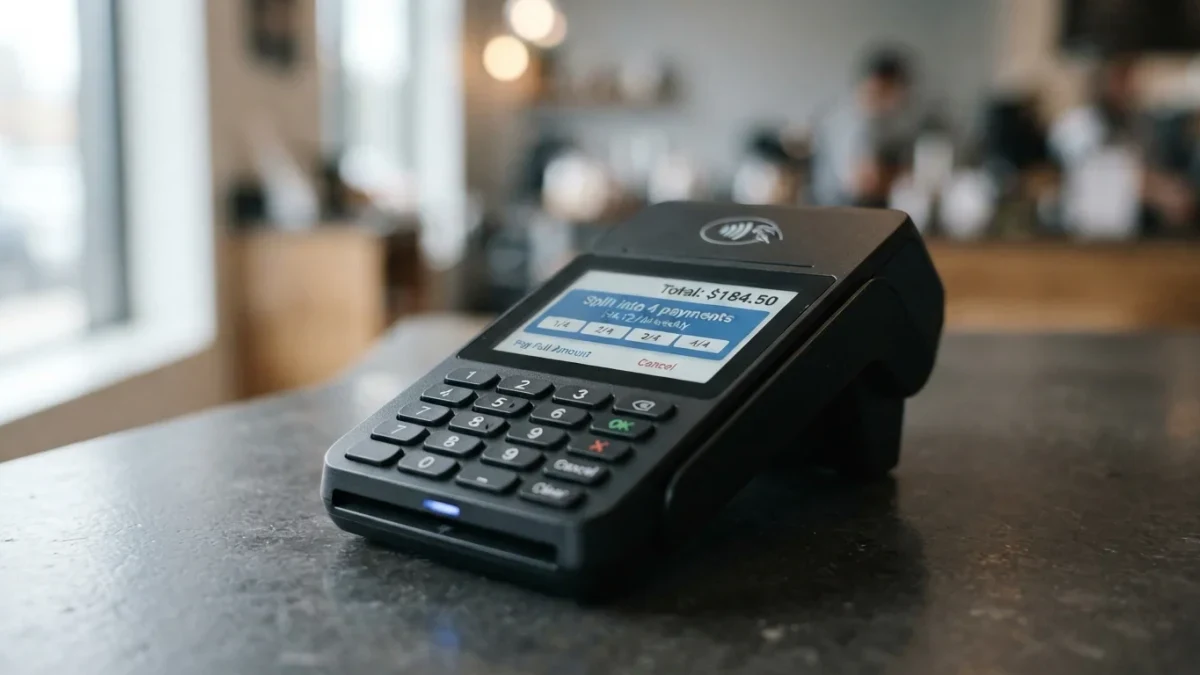
The signature format is pay-in-four. The shopper pays a quarter at checkout. The rest arrives in three installments over six weeks. The CFPB's market report describes the pattern plainly: the first installment is due at checkout, with the next three due in two-week intervals (CFPB).
The report's numbers come from 2021 order books. Approval ran at 73 percent of applicants, up from 69 percent a year earlier. The average order value was $135. Late fees, where charged, often ran around $7 per missed payment. Many pay-in-four plans carry no interest, so lender revenue leans on merchant-side fees and those consumer fees.
The 2024 Interpretive Rule
On May 31, 2024, the CFPB issued an interpretive rule on digital user accounts, the app balances customers use to reach BNPL credit. The rule said lenders behind such accounts meet the criteria for card issuers under Regulation Z. Its own words: such lenders "are also "creditors" subject to subpart B of Regulation Z, including those provisions governing periodic statements and billing disputes" (Federal Register).
That reading carried practical weight. Periodic statements would give borrowers a paper trail. Billing dispute provisions would give them refund rights when goods come back unusable or never arrive. The rule was applicable as of July 30, 2024, and the Bureau took comments on it despite no obligation to do so.
The 2025 Withdrawal
On May 12, 2025, the Bureau withdrew a long list of guidance documents, and the BNPL interpretive rule sat at the top of the interpretive rules section (Federal Register). The notice grounded the sweep in Executive Order 13891, quoting the direction that agencies "should not use guidance documents to attempt to create new rights or obligations binding on persons or entities outside of the Federal Government."
The withdrawal is a fact about guidance, not about the lending. The interpretive rule no longer sits in the Bureau's active guidance stack. Whether a given BNPL product fits Regulation Z's own definitions now rests on the regulation's text and ordinary enforcement.
What to Watch
The 2022 report already flagged the friction points. Late fees reached 10.5 percent of borrowers in 2021, up from 7.8 percent in 2020. Returns touched 13.7 percent of individual loans, and refund handling is where BNPL customers feel the card dispute system's absence. Charge-offs rose to 3.8 percent of borrowers with a loan charged off.
Usage is spreading past retail therapy. Spending on gas, groceries, and utilities hit $229.2 million in 2021 under the surveyed lenders, still 0.9 percent of volume but up 434 percent in a year. The withdrawal notice frames binding obligations as the work of regulation, so any new federal BNPL rule would need to pass through notice and comment. We covered a connected angle in How Chargebacks Work — and What Merchants Can Actually Contest.
Conclusion: A Product Waiting on Firm Rules
BNPL runs on a simple split and a fast-moving rulebook. The 2024 rule pulled the product toward credit card protections. The 2025 withdrawal let go of that reading. Volume growth, late fees, and return volumes are the numbers to watch while the Bureau decides whether BNPL gets binding rules of its own. For related coverage, see How BNPL Underwriting Split From Card Underwriting in Five Moves.