Most of us carry both without thinking: a plastic card in a pocket and a wallet app on a phone. They are not rivals so much as tools with different jobs. Knowing which to reach for, and why, makes everyday payments smoother and a little safer.
Here is a plain language comparison, built on how each technology actually works, with no product pitches and no rates, just mechanics. For related coverage, see How Online Payment Processing Actually Works Behind the Scenes.
What Your Card Actually Does
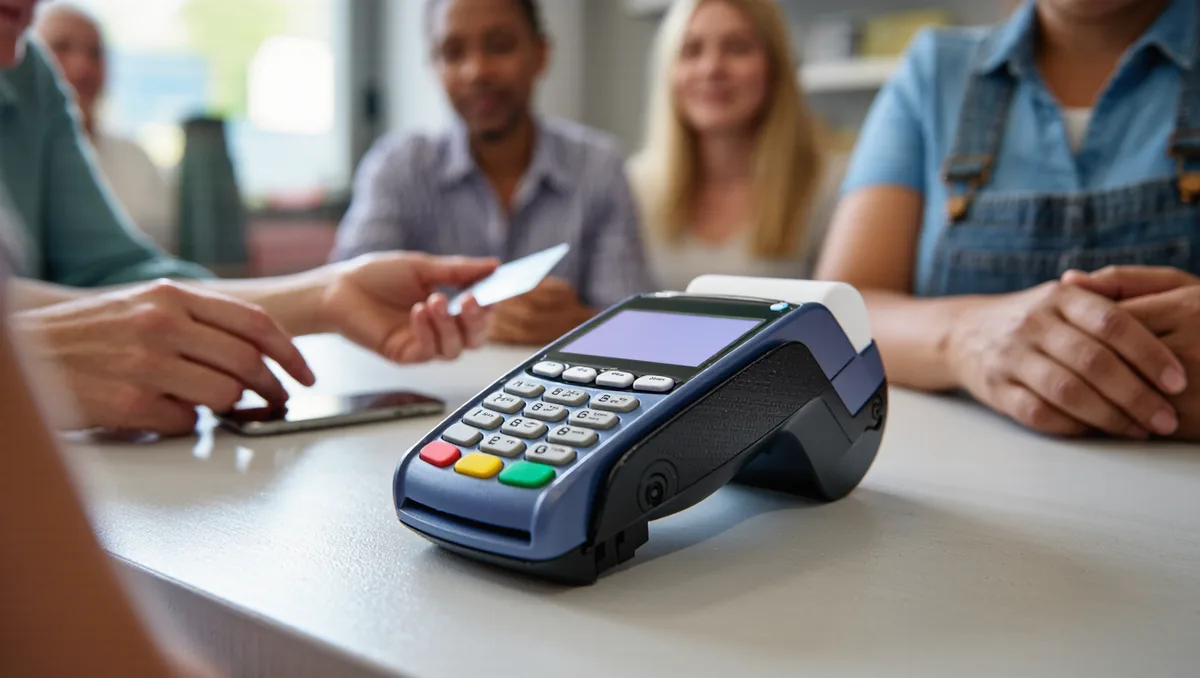
A payment card is issued by a financial institution and lets its holder pay from a bank account or a credit account, at a terminal or online. As Wikipedia's payment card overview describes, the most common types are credit, debit, charge, and stored value cards. Most cards link electronically to an account and serve as a way of authenticating the cardholder; stored value cards instead hold money on the card itself.
Cards carry decades of refinement. The first bank cards were ATM cards issued by Barclays in London in 1967 and by Chemical Bank in New York in 1969. In 1972, Lloyds Bank issued the first bank card with an information encoding magnetic strip, secured by a personal identification number. Later came chips carrying a card number and security data that machines can read.
What the Wallet Adds
A digital wallet, also called an e-wallet or mobile wallet, is a service that lets one party make electronic transactions with another, on a smartphone or computer. According to Wikipedia's digital wallet entry, a wallet can hold payment cards or be preloaded with funds, and it can also store loyalty cards, identification documents, and other credentials. Those credentials pass to a merchant's terminal wirelessly through near field communication, better known as NFC.
The wallet also wraps payment details in software security and encryption. Modern wallets increasingly verify identity, not just money: some hold digital driver's licenses, and a few checkpoints and services already accept them.
Where Each One Shines
- Speed at the counter: a wallet tap with a phone is often quicker than digging out a card.
- Online checkout: wallets can complete payment forms in one step, without typing card numbers.
- Universality: the card still wins where terminals are old, offline, or lack NFC.
- Fallbacks: a card works when a phone battery does not, and a wallet works when the card is at home.
- Organization: tickets, passes, and receipts live naturally inside the wallet.
How to Decide Day to Day
Think in terms of situation, not loyalty. At a modern checkout, the wallet is usually the faster tap, and it stands between your card details and the merchant. At a small shop with an older terminal, the card is the reliable choice. Online, let the wallet do the typing when a site supports it, and keep the card for the sites that do not. Small habits like these add up faster than any single gadget choice. We covered a connected angle in Managing Online Payments and Subscriptions Without Surprises.
Two habits help either way: review your statements regularly, whichever tool you used, and keep only the cards in your wallet app that you actually use.
Security deserves a word too. A wallet shares your card's account but hides the raw numbers behind the phone, while a card exposes its details each time it is handed over or typed in. Neither is perfect, and both reward the same basics: use strong phone locks, check statements often, and report anything odd early.
Conclusion: One Pocket, Two Good Tools
Cards and wallets are layers of the same system. The card is the account on plastic, refined since the 1960s. The wallet is the software that carries the card, plus everything else, behind the lock screen of your phone. Use the wallet for speed and tidiness, the card for reach and backup, and the day to day question answers itself: it was never either or.