Reading finance news like an analyst means doing three things most readers skip: finding the primary source behind the story, checking who disclosed each number, and asking what the headline leaves out. The dictionary definition is a useful starting point. To read, per the Cambridge Dictionary, is to obtain meaning from written words — and in market coverage, the meaning usually sits several paragraphs below the headline.
The gap matters because finance headlines are built for speed, and speed strips context. A story that says "rates held" tells you almost nothing until you know which rate, held by whom, and against what baseline. This guide walks through the questions an analyst asks, in order, and shows how they apply to the kind of coverage we publish on finance news every week.
What is the primary source behind the story?
Every finance story has a chain of custody. A regulator publishes a rule. A company files an earnings statement. A central bank issues a decision. The reporter reads that document and summarizes it. By the time the summary reaches a headline, two or three layers of interpretation sit between you and the original text.
The analyst's first move is to trace the chain backward. If a story covers a Fed decision, the primary source is the central bank's own statement. If it covers a debit fee rule, the primary source is the regulator's published text — as in our breakdown of the Federal Reserve's debit interchange cap. If it covers a bank's quarter, the primary source is the bank's own disclosure, which is why our earnings coverage attributes every figure to the company that reported it. This connects to our earlier piece, Federal Reserve Caps Debit Interchange At 21 Cents Plus Fraud Fee. This connects to our earlier piece, Federal Reserve Caps Debit Interchange At 21 Cents Plus Fraud Fee.
You do not need a Bloomberg terminal to do this. Most primary documents are public and free. The habit of asking "who said this first?" costs nothing and catches most distortions.
Who disclosed the number, and what does that mean?
Not all numbers carry the same weight. A figure a company discloses about itself is a fact about the disclosure, not independent proof that the underlying claim is true. A bank's quarterly profit is what the bank reported; the bank is the source of its own metrics. An analyst treats self-reported figures as accurate about the filing but never as verification that a product works as advertised.
That distinction changes how you read announcements. When a payments company launches a new feature, the announcement tells you what the company says the feature does. It does not tell you whether it does it. Our coverage of open-banking compliance, for example, rests on the regulator's rule text rather than on any bank's marketing about the rule — see CFPB Finalizes Section 1033 Open-Banking Rule With Compliance Starting in 2026. Readers following this should also see CFPB Finalizes Section 1033 Open-Banking Rule With Compliance Starting in 2026. Readers following this should also see CFPB Finalizes Section 1033 Open-Banking Rule With Compliance Starting in 2026.
A quick test: for any number in a story, ask whether the source benefits from the number being read a certain way. If yes, look for corroboration or read the claim more narrowly.
What is the headline hiding?
Headlines compress. Compression removes qualifications, and in finance the qualifications are often the story. Three patterns show up repeatedly.
- The base-effect headline. "Inflation jumps 0.9%" sounds alarming until you learn which component drove it. Our March 2026 CPI coverage (What March 2026 CPI Showed) attributed the monthly jump to a single volatile category, not broad price pressure.
- The causation headline. "Mortgage rates rise after Fed decision" implies a link that often does not exist, as we explain in Why Mortgage Rates Don't Follow the Fed.
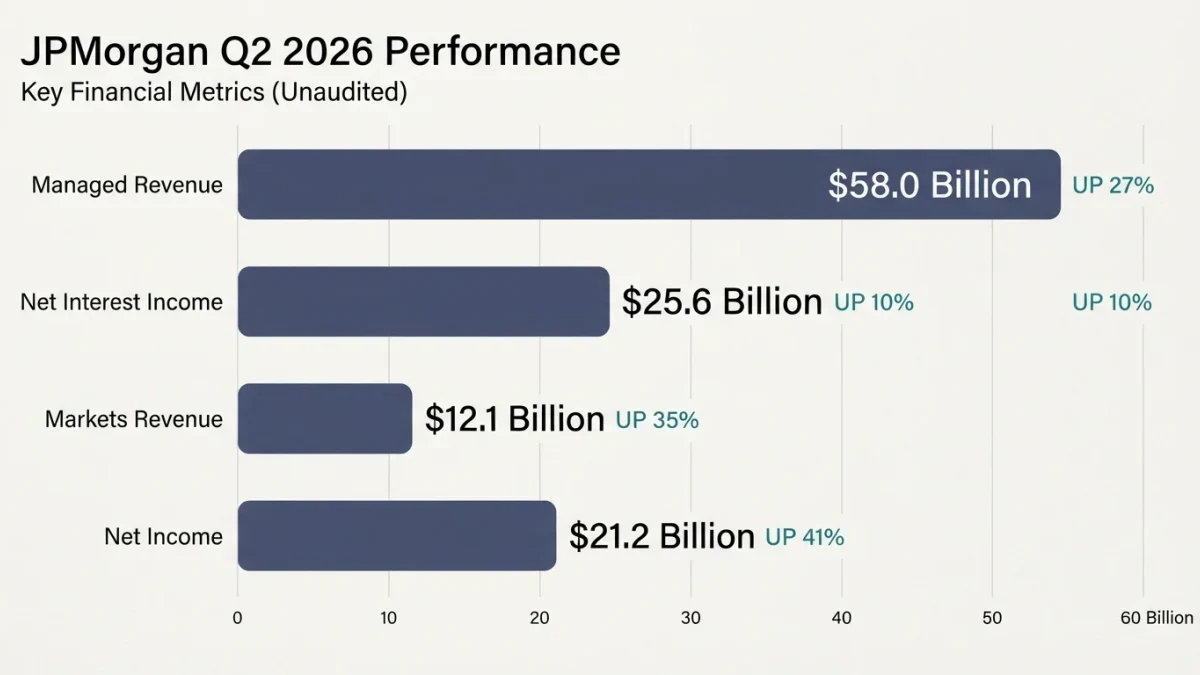
- The record headline. "Record profit" is true and meaningless without scale. A record nominal quarter can coincide with shrinking margins. Our Q2 2026 bank earnings wrap pairs the headline figure with the trend lines around it.
None of these headlines are lies. They are all incomplete. The analyst's job is to supply the missing clause.
What does this actually change, and for whom?
Our analysis: the most reliable filter for finance news is the operational question. Who has to do something differently, and by when? A rule that binds banks but not consumers, effective in two years, is a different story from one that hits merchants next month — even if the headlines read the same.
Take error resolution in consumer bank accounts. The operational fact is a clock: under Regulation E, banks have a defined window to investigate errors, and the length of that window depends on the dispute type. Our explainer on CFPB's Regulation E error-resolution timeline leads with whom the rule binds and the timeline, because those are the details a reader can act on.
The same filter works on earnings, rate decisions, and product launches. If you cannot state who is affected and what changes, you have read a mood, not a story.
Where can a reader find the raw material?
Primary sources are more accessible than most readers assume. Regulator texts live on .gov sites. Central bank decisions are published with statements and minutes. Company filings are publicly searchable. For broader background reading, free books on economics and markets are widely available; Goodreads maintains a free online shelf that includes classic finance titles alongside everything else.
The practical habit is simple. When a story moves your money — a rate decision, a fee rule, a change to how your card works — spend ten minutes with the source document before forming a view. Ten minutes beats most hot takes.
What this means for your weekly reading
Reading finance news like an analyst is a repeatable sequence, not a talent. Run it in order:
- Identify the primary source. Who published the original document?
- Label each number. Disclosed by whom, about what, as of when?
- Restore the missing qualification. What does the headline omit?
- Ask the operational question. Who is affected, and by when?
- Check the mechanism. Does the claimed link between cause and effect match how the system actually works?
The evidence this method rests on is durable: disclosure chains, rule texts, and rate mechanics do not change with the news cycle. What remains unknown in any given story is usually the part nobody can source yet — forward guidance, market reactions, second-order effects. A good reader holds those open rather than filling them with the headline's implication.