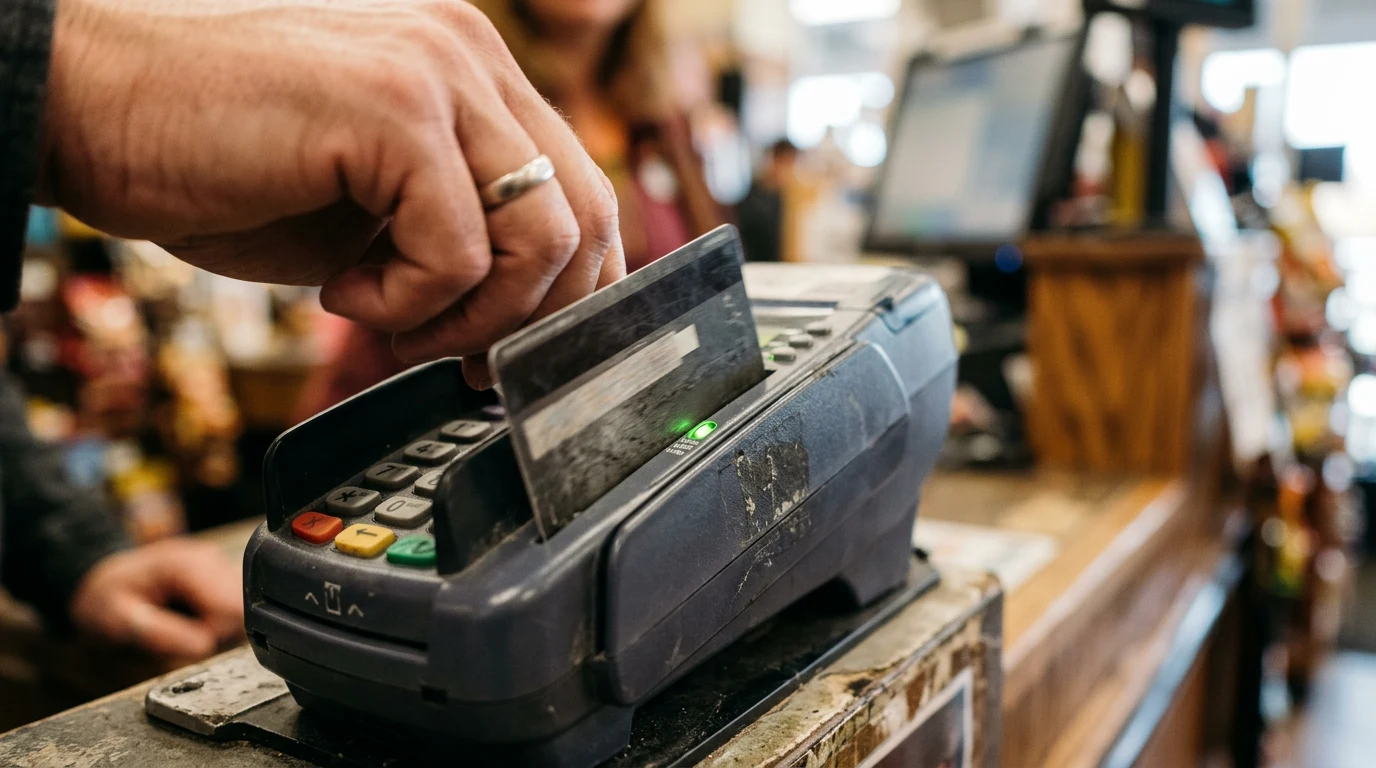
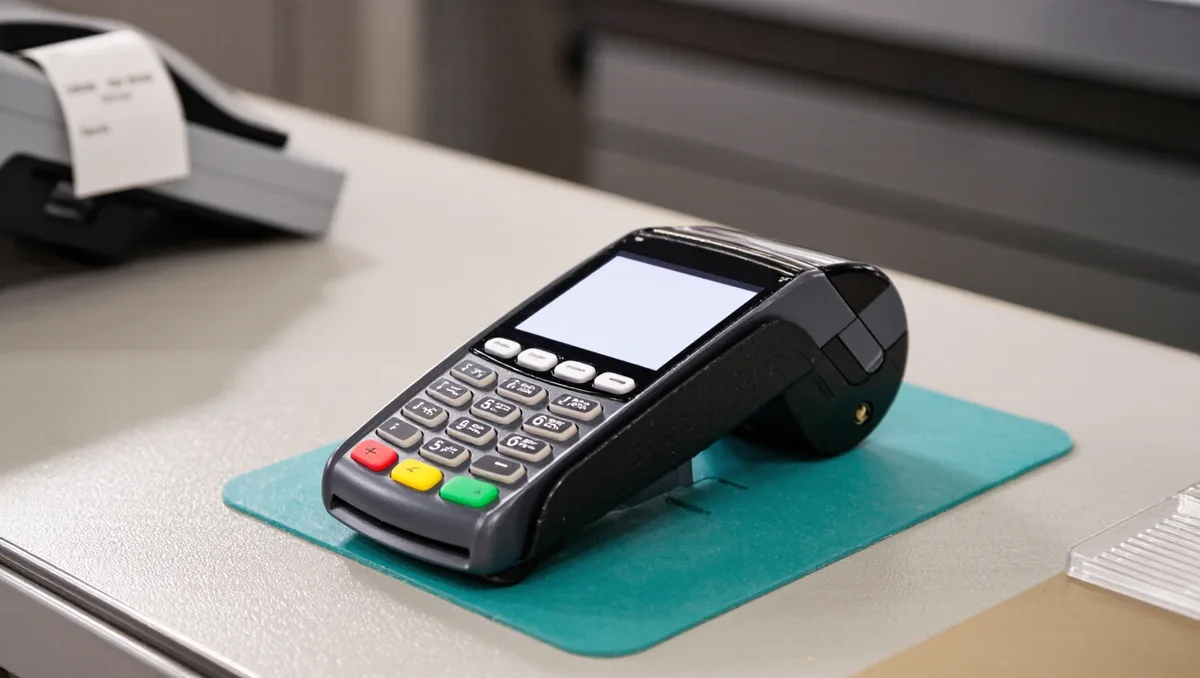
When a customer taps a card, the merchant's bank — the acquirer — does most of the invisible work. It routes the authorization request to the card network, decides whether the merchant is worth the risk, collects the day's approved sales into a batch, and pays the merchant's account the net balance. The whole handoff typically finishes before the merchant sees the money, which is the point.
The card acquirer role sits on the merchant's side of every transaction. The issuing bank, on the customer's side, decides whether the cardholder's credit or deposit account can cover the purchase. The two banks never talk directly; the card network sits between them. Understanding where the acquirer stands explains where fees sit too — and who eats the losses when something goes wrong.
Merchants rarely meet the acquirer head-on. A processor or payment gateway usually fronts the relationship, and the acquiring bank works behind it. That layering is why the fee line on a merchant statement looks so crowded.
What does an acquirer actually do?
An acquirer is a bank or financial institution that processes card payments on a merchant's behalf. Wikipedia's entry on acquiring banks describes it plainly: the acquirer contracts with the merchant, provides a merchant account separate from the business's operating account, and settles funds received from the cardholder's issuing bank. Every approved sale lands in that merchant account as a net figure — gross sales minus reversals, interchange fees, and the acquirer's own markup.
According to Stripe's explainer on acquirers versus issuers, each acquirer is identified on the payment network by an Acquirer Identification Number, which routes transactions to the right institution. The acquirer also issues the merchant an identifier of its own so the business can communicate with the card networks. Some acquirers, Stripe among them, bundle processing and acquiring so a business never needs a separate merchant account or gateway. Most still act as intermediaries that hand the transaction to the correct network.
The four-party model is worth keeping in mind: cardholder, merchant, issuer, acquirer. Visa and Mastercard are not issuers or acquirers. They run the rails; the two banks do the transaction work.
What happens in the first seconds after a swipe?
Authorization is a routing job with a deadline. The terminal or gateway captures the card data, the processor packages it, and the acquirer sends the request across the card network to the issuing bank. The issuer checks the account, runs its own fraud screens, and returns an approve or decline. That answer travels back through the same chain in seconds, and the merchant completes the sale.
One detail does a lot of routing work: the first six to eight digits of the card, the Bank Identification Number. As Stripe's resource notes, the BIN identifies the issuing institution, the network, and the card tier, which lets the transaction route correctly and qualify for the right interchange rate. Get the BIN handling wrong and a payment can still clear — at a worse rate, or flagged as riskier than it is.
An approval is not money. It is a promise that the issuer will cover the amount if the transaction settles. The acquirer's later job is to collect on that promise.
Why does the acquirer underwrite the merchant?
Because the acquirer carries the merchant's risk. The acquiring bank accepts the risk that a merchant will go under — and, more expensively, the risk of fund reversals. Wikipedia's overview lists the three ways money can flow back out: a refund the merchant initiates, a reversal where the merchant cancels an authorized transaction before settlement, and a chargeback, where the cardholder disputes the charge through the issuing bank.
A fraudulent new merchant is the sharper danger. The scenario Wikipedia describes is simple: take a large number of orders, collect the payments, and vanish without delivering anything. The acquirer has already paid the merchant or is on the hook when the chargebacks arrive. So acquirers screen applicants the way lenders screen borrowers — business history, delivery model, refund patterns, financial condition. A subscription box and a same-day florist are not the same risk, and the underwriting file treats them differently.
Chargeback rates carry consequences at the network level. Wikipedia notes that card associations treat a merchant as a risk once chargebacks exceed roughly 1% of received payments, and that Visa and Mastercard can fine acquiring banks that keep high-chargeback merchants. Acquiring banks often pass those fines through to the merchant.
How does batching and settlement actually work?
Authorization and settlement are two separate events. During the day, approved transactions pile up. At the end of the business day — or on a schedule the merchant sets — the acquirer sends the accumulated batch to the card networks, which route each item to the right issuer for clearing.
Then the money moves in the other direction. Issuers release funds to the acquirer, and the acquirer deposits the net balance into the merchant account. Wikipedia's description of the arrangement is precise: the acquirer pays the merchant the daily net balance — gross sales minus reversals, interchange, and acquirer fees. The acquirer's markup sits on top of network interchange and, per Wikipedia, varies at the acquirer's discretion. That discretion is why two merchants with identical sales can see different deposit amounts. Readers following this should also see How the Fed Funds Rate Actually Reaches Your Savings Account.
Funding speed is a commercial lever. Some acquirers fund next day, some same day for a fee, some slower for riskier accounts. The rail is the same; the terms are not.
What does a chargeback cost the acquirer?
The acquirer is liable for repaying the issuer when a chargeback sticks, and the issuer returns the funds to the customer. Stripe's write-up of the acquirer's liability points out the operational cost too: reviewing chargeback requests and fulfilling them consumes internal resources, which is one reason acquirers may hold reserves against merchant accounts. A reserve is exactly what it sounds like — money the acquirer keeps back in case the merchant's disputes or refunds outrun its balance.
Security obligations follow the same logic. Acquirers must meet the Payment Card Industry Data Security Standards, and many insist their merchants comply as well. Wikipedia notes that a non-compliant merchant may bear fraud losses and scheme fines itself. Compliance here is not paperwork for its own sake; it is how liability gets allocated before a breach, not after.
What this means for merchants and customers
For a merchant, the practical takeaways are three. First, the acquirer's underwriting decision shapes pricing: a riskier profile means higher markups, reserves, or both. Second, the acquirer fee is separate from interchange — the network-set component that regulators have touched, as in the Federal Reserve's debit interchange cap covered in our earlier reporting. Third, dispute volume is a pricing input, not just a customer-service problem. We covered a connected angle in Federal Reserve Caps Debit Interchange At 21 Cents Plus Fraud Fee.
For a customer, the acquirer is mostly invisible, and that is the design. The dispute path runs through the issuing bank, which is why a cardholder never contacts the merchant's bank. What the acquirer guarantees is that the merchant gets paid and that the machinery behind the refund or chargeback has a counterparty on the merchant's side.
The evidence here establishes the division of labor: the issuer represents the cardholder, the acquirer represents the merchant, and the network connects them. What it does not settle is how any individual acquirer prices its markup or sets its reserves — those are commercial terms, and they vary. Merchants comparing offers should ask where each fee sits and who holds the reserve. That question, asked early, is cheaper than discovering the answer in a dispute.