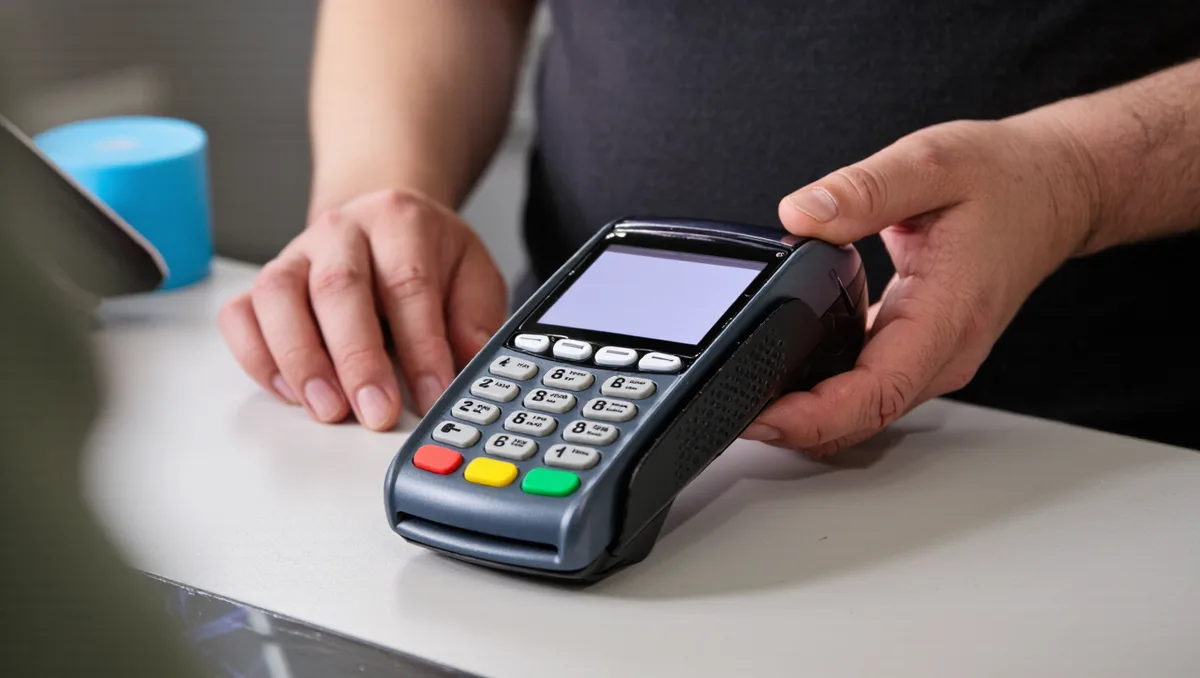

An instant payout moves earned gig income from the platform’s ledger to a debit card or bank account in minutes instead of days, at any hour of any day. Stripe’s published Connect docs put numbers on the promise. Requests run 24/7, weekends and holidays included, and funds typically settle within 30 minutes.
The mechanics are two moves. The platform’s payout processor pushes the balance over a card or account-to-account rail, and the receiving institution credits it on arrival. Speed is the product; finality is the price. A push transfer lands as spendable money, and no switch reverses it the way an issuer reverses a card charge. What recourse exists after a misdirected or unauthorized transfer is its own procedure, covered in what Regulation E requires banks to do after an unauthorized transfer.
This piece follows the money through the trigger, the rails, the fee schedule and the dispute path. The innovation desk keeps a running file on the rest of the build-out.
What Sets Off an Instant Payout?
Platforms hold earned balances until a payout runs, and the default schedule batches them. The instant option lets a worker pull a balance on demand, and eligibility starts with the funding source. Under Stripe’s rules, money from card charges becomes available for instant payout the moment the charge completes, while balances funded by bank debit, such as ACH, wait until that payment settles. Stripe also runs an active daily volume limit per platform, which is why instant access can cover part of an earnings balance and not all of it.
Which Rails Carry the Money?
A payout lands two ways. Push-to-card sends funds to the linked debit card through the card networks’ push services. Account-to-account transfers ride the real-time rails. The Clearing House’s RTP network has run since 2017 and has cleared and settled more than $3.6 trillion over 1.8 billion transactions, with over 1,378 participating institutions as of September 2026, per The Clearing House’s figures. The Federal Reserve’s FedNow service does the same job for banks of different sizes. Through participating institutions, businesses and individuals send and receive instant payments in real time, around the clock, every day of the year. Recipients get full access to the funds immediately, per the Fed’s service description.
What Does an Instant Payout Cost?
Stripe charges platforms a 1% fee on every instant payout under its published Connect schedule, as of October 2026. The United States minimum is $0.50 per transfer, and the maximum is $9,999. The processor’s charge is the platform’s cost; the worker’s price is whatever the platform’s terms say. The docs list the fee line as a revenue option, which is refreshingly blunt: convenience is priced, not donated. Moving a $400 cash-out costs the platform $4 at that rate, so a platform that passes the fee through shows the worker the real meter.
What Happens When a Transfer Goes Wrong?
Finality cuts against whoever pushes the money. A platform that pays the wrong destination asks the receiving bank for help with recovery, since a completed credit carries no recall switch. For workers, the protection depends on the account type. Regulation E sets the investigation timetable a bank owes a consumer who reports an unauthorized electronic transfer; business accounts taken by contractors stand outside that shield, which leaves the platform’s terms as the operative contract. Speed also compresses the window for catching a mistyped destination. That is why payout flows confirm the account before the push. For related coverage, see What Regulation E Requires Banks To Do After an Unauthorized Transfer.
Conclusion: Speed Is a Feature, Priced Like One
Instant payouts convert an idle platform balance into same-hour cash for workers between rides or between invoices. The rails behind the button are real: the card networks’ push services and the real-time rails RTP and FedNow run every day of the year. A published 1% tells the worker what the convenience costs. Finality remains the fine print, and the Regulation E clock is what starts when a push goes astray. This connects to our earlier piece, How Instant Payment Rails Differ Under the Hood: RTP, FedNow, Zelle.